Battery backup and offline memory
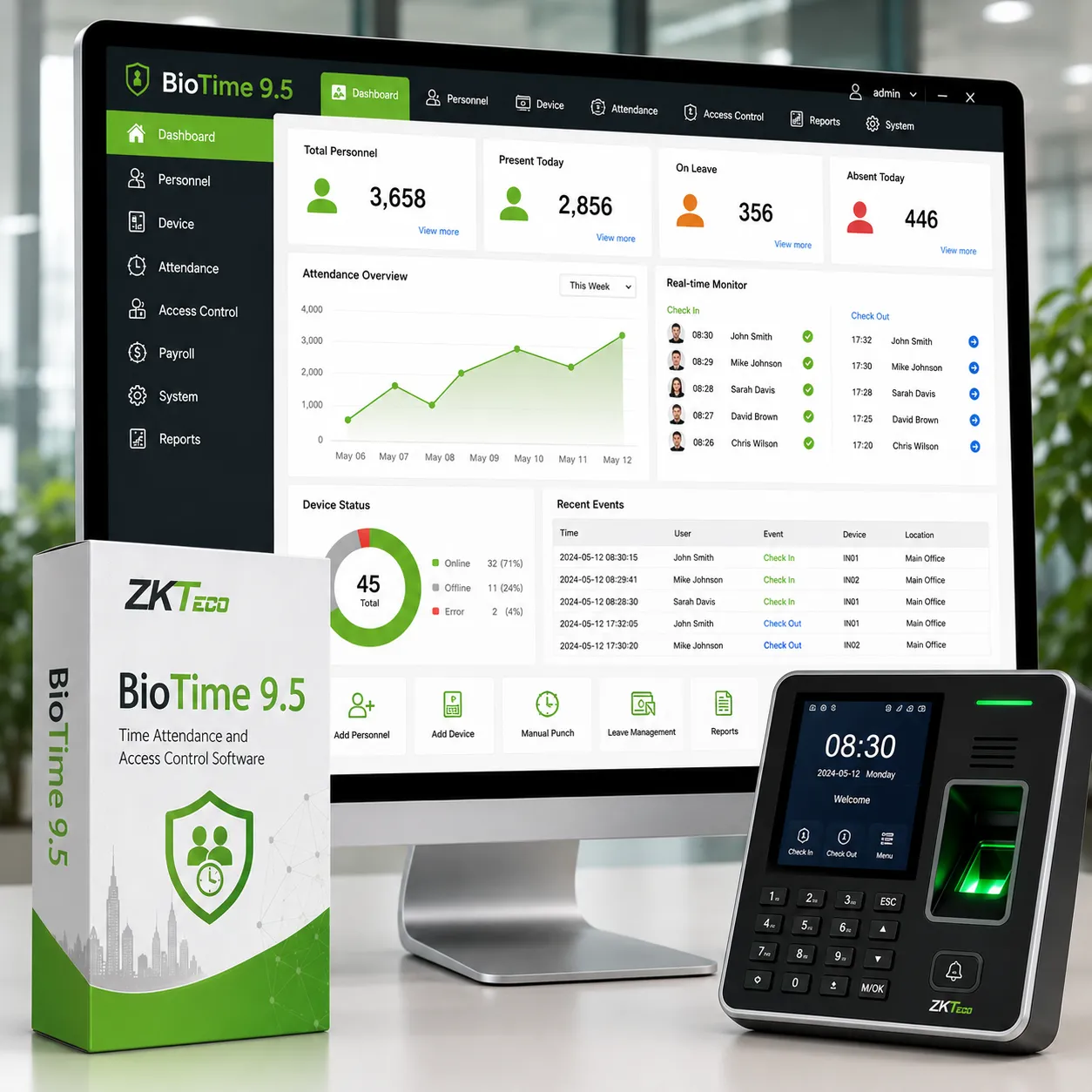
Terminals fitted with a backup battery or wired to a UPS keep recording through grid failures and generator changeovers. Punches stay in device memory and upload with their original timestamps once the link returns.
Free demoFree demo for teams across the UAE, GCC & Africa · Book now
Biometric clocking · Africa
A biometric clocking system in Africa has to keep working through dust, heat and power cuts. AITIME pairs fingerprint, face and card terminals with cloud software that stores punches offline and turns them into payroll-ready hours.
Get a quote for Africa
Share your headcount and sites. A specialist replies with a demo slot and pricing.
In short
AITIME is a biometric clocking system for African employers. It works with ZKTeco, Hikvision, Dahua and AITime fingerprint, face recognition and RFID card terminals, which hold punches in memory during power cuts and sync when the network returns. The software applies local working-hour rules and exports hours for payroll. It suits factories, mines, farms, hospitals and security firms.
Last reviewed 3 November 2026 · AITIME implementation team
Overview
In many African factories, mines and estates, the biometric clocking system is a single fingerprint reader at the gate, bought years ago and wired to one PC in the HR office. When the power drops it goes dark. When dust coats the sensor, half the shift cannot clock in and supervisors write names on paper. At month end someone pulls a USB file and payroll guesses at the gaps.
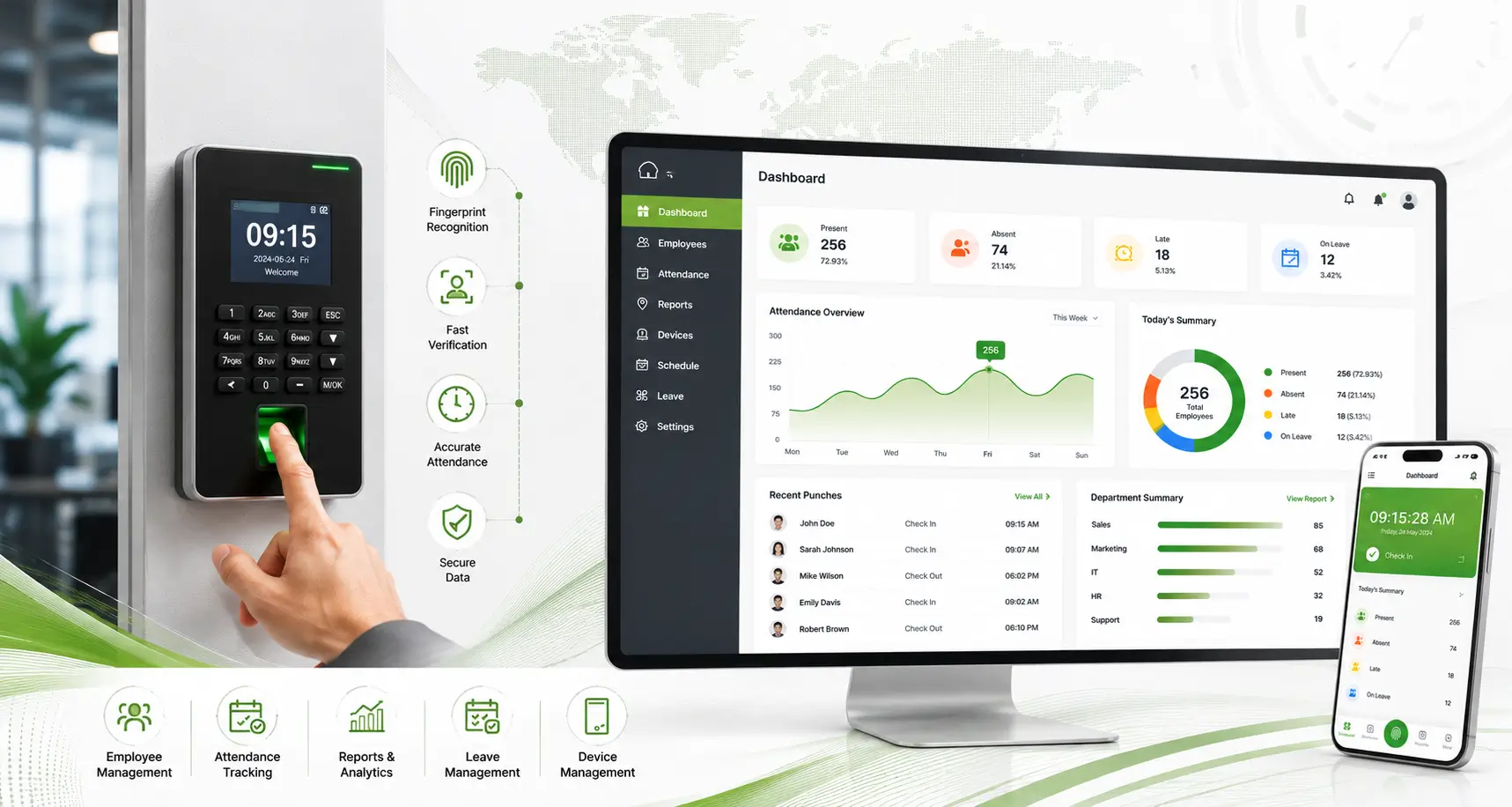
AITIME keeps the terminals and changes what sits behind them. Fingerprint, face recognition and RFID card devices send punches to one cloud record over Ethernet, Wi-Fi or a mobile data router. Each terminal holds punches in its own memory, so an outage or dropped connection only delays the sync and never deletes a shift. Supervisors check who is on site from a phone instead of a back-office PC.
Choosing the right device matters. Face recognition suits dusty sites, clinics and food plants because nothing is touched and worn fingerprints are not a problem. Fingerprint readers cost less and work well in offices. RFID cards help during mass enrolment of seasonal workers. Biometric data is sensitive personal data under Nigeria's NDPA 2023, Kenya's Data Protection Act 2019 and South Africa's POPIA, so plan notices and access controls alongside the hardware.
Already running ZKTeco readers or BioTime software? Most compatible models can be reused as they are. We review your device list during the demo, guide your team or installer through setup remotely by WhatsApp, phone and video, and discuss on-site installation if the project needs it.
Features
Terminals fitted with a backup battery or wired to a UPS keep recording through grid failures and generator changeovers. Punches stay in device memory and upload with their original timestamps once the link returns.
Touch-free face terminals read workers at mine gates, construction sites and food processing plants where fingerprints are worn, dirty or gloved. Liveness checks on supported models reject photos and videos held up to the camera.
Register large groups of seasonal or daily-paid workers in batches at the terminal or from an imported staff list. Issue RFID cards to anyone who cannot enrol a fingerprint, and deactivate leavers in one step.
Many African sites already run ZKTeco readers. AITIME connects most compatible models, including those managed in BioTime or ZKBio CVSecurity, plus Hikvision and Dahua terminals, so you replace software rather than hardware.
A worker has to be physically present to clock in. Face and fingerprint checks stop friends clocking for absent colleagues, and every manual edit to a punch is recorded in the audit trail with the editor's name.
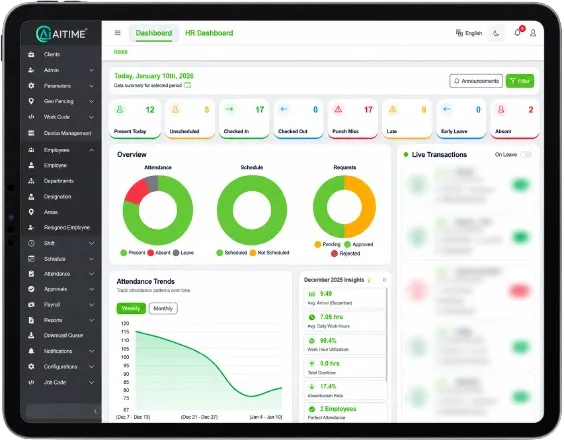
See who has clocked in at each gate, farm block or factory line in real time, spot missing punches before payroll closes, and pull attendance reports without driving out to the site.
Compliance
A clocking machine collects two kinds of regulated data: biometric templates and the working hours that drive pay. Both fall under national laws, and AITIME is set up to help employers meet them.
Nigeria's NDPA 2023, Kenya's Data Protection Act 2019 and South Africa's POPIA classify biometric data as sensitive or special personal information. Employers need a lawful basis, a clear notice to staff and limited access. AITIME restricts who can view templates and logs by role.
Kenya's ODPC registers data controllers and generally expects an impact assessment for high-risk processing such as biometrics. Nigeria's NDPC requires registration from data controllers of major importance. A clear device inventory and AITIME's access logs make those filings easier to support.
Overtime claims and disputes turn on records. South Africa's BCEA 1997 caps overtime at 10 hours a week, Kenya's general wages order sets a 52-hour week, and Ghana's Labour Act sets 8 hours a day. Timestamped biometric punches give HR evidence that holds up.
Templates should not outlive employment. Data protection laws across the region expect personal data to be kept only as long as needed, so remove leavers' biometric records once final pay is settled while keeping the attendance history your payroll and tax records require.
Mine and construction managers need to know who is underground or on site at any moment. Clock-in and clock-out records at shaft heads and gates give a live headcount to support emergency musters, alongside your formal lamp-room or access control system.
Industries
Face terminals at lamp rooms and shaft heads, where dust and gloves make fingerprints unreliable.
RFID cards and face recognition for pickers and pack-house teams enrolled in large groups each season.
Touch-free clocking at hygiene-controlled entrances and turnstiles, with shift and overtime rules per line.
ExploreWeatherproof terminals at site gates and battery-backed units where the site runs on a generator.
ExploreContactless face terminals for nursing and support staff on rotating day and night shifts.
ExploreTerminals at client sites and the mobile app for guards on patrol, with every shift change recorded.
ExploreTell us how many people you employ, where they work and which devices you already own. We will map the rules, devices and payroll output before you commit.
Coverage
Terminals and software are supported remotely in these cities, with on-site installation discussed during the demo:
FAQs · Africa
Cannot see your question? Message us and a specialist will answer the same day.
Ask on WhatsAppCost depends on how many terminals you need, the model and verification method, whether units need weatherproof enclosures or battery backup, installation and cabling, and the software licence for your headcount. Reusing existing ZKTeco readers removes most hardware cost. Share your sites and employee numbers and we will send a quote covering devices and software.
Fingerprint readers are affordable and accurate in offices and clean environments. Face recognition is better at mines, farms, construction sites and food plants, where fingers are worn, dirty or gloved, and where touch-free clocking helps hygiene. Many companies mix both, with RFID cards as a fallback for workers who cannot enrol.
If the terminal is on a backup battery or UPS, staff keep clocking normally. Punches are stored in the device memory whether or not the network is up, then upload with their original timestamps when the connection comes back. Nothing needs to be re-entered, and payroll sees the true arrival time.
In most cases, yes. AITIME connects to many ZKTeco models, including devices already managed through BioTime or ZKBio CVSecurity, as well as Hikvision and Dahua terminals. Send us your model numbers before the demo and we will confirm which can be reused and whether any firmware or network changes are needed.
Import the worker list first, then enrol faces or fingerprints at the terminal in batches, often by shift or by team. Workers whose fingerprints will not read can be issued RFID cards. Leavers are deactivated in one step, which matters on estates and sites where hundreds of people join and leave each season.
It depends on the country and your lawful basis. Nigeria's NDPA 2023, Kenya's Data Protection Act 2019 and South Africa's POPIA allow biometric processing with proper safeguards, and explicit consent is one common route. Tell staff what is collected and why, offer a card or face option where reasonable, and confirm your policy with local counsel.
Yes. The AITIME mobile app lets staff check in by GPS inside a geofence you set around a farm block, client site or project. It works offline and uploads later. Terminals remain the best option at fixed gates, while the app covers drivers, field officers and small remote sites.
We guide your IT team or a local installer remotely by WhatsApp, phone and video: mounting, network settings, connecting devices to AITIME and enrolling the first staff. A single site with existing devices can go live in about a day. On-site installation for larger rollouts can be discussed during the demo.
Free demo & quote
A 20 minute live walkthrough using your own shift patterns and sites, followed by a written quote. No obligation.