Free demo · Book now

Time Attendance System logo

Uganda · East Africa

Staff Attendance Software in Uganda

AITIME is attendance software for Uganda that links biometric terminals and a GPS mobile app to one staff record, applies Employment Act 2006 rules and gives payroll clean inputs for PAYE, NSSF and Local Service Tax.

  • Free live demo
  • Arabic & English
  • Works with existing devices

Get a quote for Uganda

Share your headcount and sites. A specialist replies with a demo slot and pricing.

No obligation. We usually reply within one business hour.

In short

Staff Attendance Software for Uganda: the short answer

AITIME is a staff attendance system built for organisations in Uganda. It collects punches from ZKTeco, Hikvision and Dahua fingerprint or face terminals and a GPS mobile app, applies Employment Act 2006 rules on the 48-hour week, overtime and 21 working days of annual leave, and exports payroll inputs for PAYE, NSSF and Local Service Tax. It suits farms, factories, NGOs, schools and project camps.

Last reviewed 3 November 2026 · AITIME implementation team

Uganda at a glance for HR teams

Governing law
Employment Act 2006
Normal working hours
48 hours a week, with limits on extended hours by agreement
Overtime pay
At least 1.5x the hourly wage; at least 2x on public holidays
Weekly rest
At least 24 hours of rest in every seven days
Annual leave
21 working days a year (7 days per 4 months of continuous service)
Social security
NSSF: 5% employee + 10% employer, due by the 15th of the next month
Employment taxes
PAYE to URA monthly; Local Service Tax to the local government
Data protection
Data Protection and Privacy Act 2019; register with the PDPO

Overview

One staff attendance record from Kampala to the Albertine region

Ugandan employers manage attendance across very different settings. A Kampala office has a fingerprint clock at reception, a flower farm off the Entebbe road counts workers on paper at dawn, a sugar estate near Jinja runs field gangs and factory shifts, and an oil services contractor near Hoima rotates crews through a camp. Each keeps its own record, so HR rebuilds the month in Excel before payroll can run. Attendance software in Uganda needs to bring those sites together without forcing every one to work the same way.

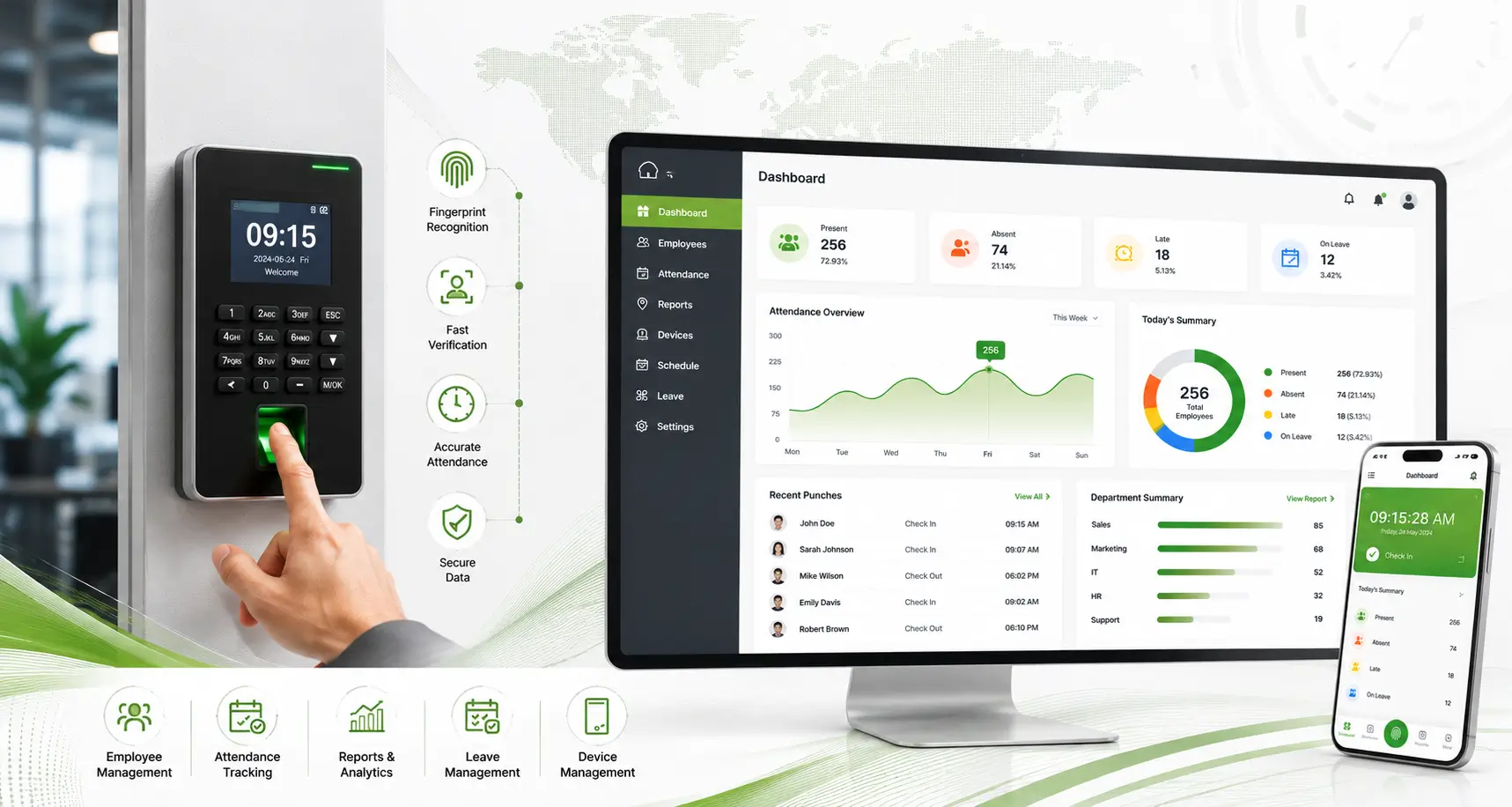
AITIME gives each site the method that suits it, then merges the results. Face or fingerprint terminals at offices and factory gates, the GPS mobile app for NGO field officers and sales teams, and offline capture for farms and camps with weak coverage all feed one timeline per employee. Camp-based work can run on 28/28 and other rotation patterns.

Rules follow the Employment Act 2006: a normal week of 48 hours, overtime at the premium rates, at least 24 hours of weekly rest and 21 working days of annual leave. At month end, approved hours and absences flow to payroll, where NSSF at 5% from the employee and 10% from the employer, PAYE for URA and Local Service Tax are calculated. Many Ugandan employers pay casual and field staff by mobile money, and the export works alongside whichever payroll or payment tool you already use.

We start remotely with the devices you already own, import staff and run one parallel pay cycle. After go-live, help is a WhatsApp message or phone call away, and if on-site installation matters to you, bring it up in the demo.
Book a free demo

Features

What you get in Uganda

Biometric terminals for offices and gates

Fingerprint, face and RFID card terminals from ZKTeco, Hikvision and Dahua work at Kampala offices, Namanve factories and farm gates alike. Compatible machines you already own can usually be reused, which keeps hardware spending down.

Offline capture for farms and camps

Flower farms near Lake Victoria, tea estates in the west and camps in the Albertine region often lose signal. Terminals and the app store punches locally and sync them later with the original timestamps.

Camp rotations for oil and construction

Contractors working around Hoima, Buliisa and along the EACOP pipeline route can run 28/28 and other rotation rosters, with a live view of who is on site, on their off rotation or due back.

GPS check-in for NGO field teams

Programme officers working in West Nile, Karamoja or refugee settlements in the southwest check in from the mobile app inside geofenced project sites, with offline capture when they are beyond network coverage.

Payroll inputs for NSSF, PAYE and LST

Each month AITIME hands payroll a clean file of hours, overtime, unpaid leave and absences. Your payroll system then applies NSSF at 5% plus 10%, PAYE and Local Service Tax to gross pay that matches what people actually worked.

Self-service app for remote staff

The iOS and Android app shows each person their punches, schedule and payslips, and lets them request leave. Field officers, teachers and estate staff far from head office get answers without phoning HR in Kampala.

Compliance

Ugandan employment, tax and data rules that depend on attendance

Private employers in Uganda work under the Employment Act 2006, the NSSF Act and the Income Tax Act, with personal data governed by the Data Protection and Privacy Act 2019. AITIME turns the attendance-dependent parts into automatic rules and clean payroll inputs.

  1. 01

    Hours, overtime and rest

    The Act sets a normal maximum of 48 hours a week. Hours beyond that are paid at no less than one and a half times the hourly wage, and public holiday work at no less than double. Every employee is entitled to at least 24 hours of rest in each seven-day period. AITIME applies these from punch data.

  2. 02

    NSSF contributions

    Employers remit 15% of gross pay to NSSF each month: 5% deducted from the employee and 10% paid by the employer, due by the 15th of the following month. The NSSF (Amendment) Act 2022 extended mandatory cover to employers of every size, so small firms need accurate pay records too.

  3. 03

    PAYE and Local Service Tax

    PAYE is withheld under the Income Tax Act and remitted to URA monthly. Local Service Tax is a separate deduction, scaled to income and paid to the local government where the employee works, usually in instalments over the first four months of the financial year. Both depend on correct pay records.

  4. 04

    Annual and family leave

    Annual leave is seven working days for each four months of continuous service, which comes to 21 working days a year. Maternity leave is 60 working days and paternity leave four working days. AITIME keeps balances per employee and records every request and approval.

  5. 05

    Data protection and PDPO registration

    Under the Data Protection and Privacy Act 2019, a fingerprint or face template is personal data like any other staff record. Organisations that collect or process personal data must register with the Personal Data Protection Office, collect only what they need and keep it secure. AITIME limits who sees what through role-based access and logs every change.

Talk to an attendance specialist about Uganda

Tell us how many people you employ, where they work and which devices you already own. We will map the rules, devices and payroll output before you commit.

Coverage

Where we support employers in Uganda

Setup, training and support are delivered remotely to organisations across Uganda, from the capital to farm, oil and border regions:

  • Kampala
  • Entebbe
  • Wakiso
  • Mukono
  • Jinja
  • Namanve Industrial Park
  • Mbarara
  • Gulu
  • Hoima
  • Fort Portal
  • Mbale
  • Arua
  • Lira
  • Masaka

FAQs · Uganda

Questions buyers ask us

Cannot see your question? Message us and a specialist will answer the same day.

Ask on WhatsApp

How much does attendance software cost in Uganda?

Cost scales with the number of staff you track, the sites and terminals involved and the modules you add, such as payroll or the mobile app. NGOs and estates often need more app users than terminals, which changes the mix. Share your staff numbers, districts and existing devices through the form, and we will prepare a written quote.

Which biometric attendance machines work with AITIME?

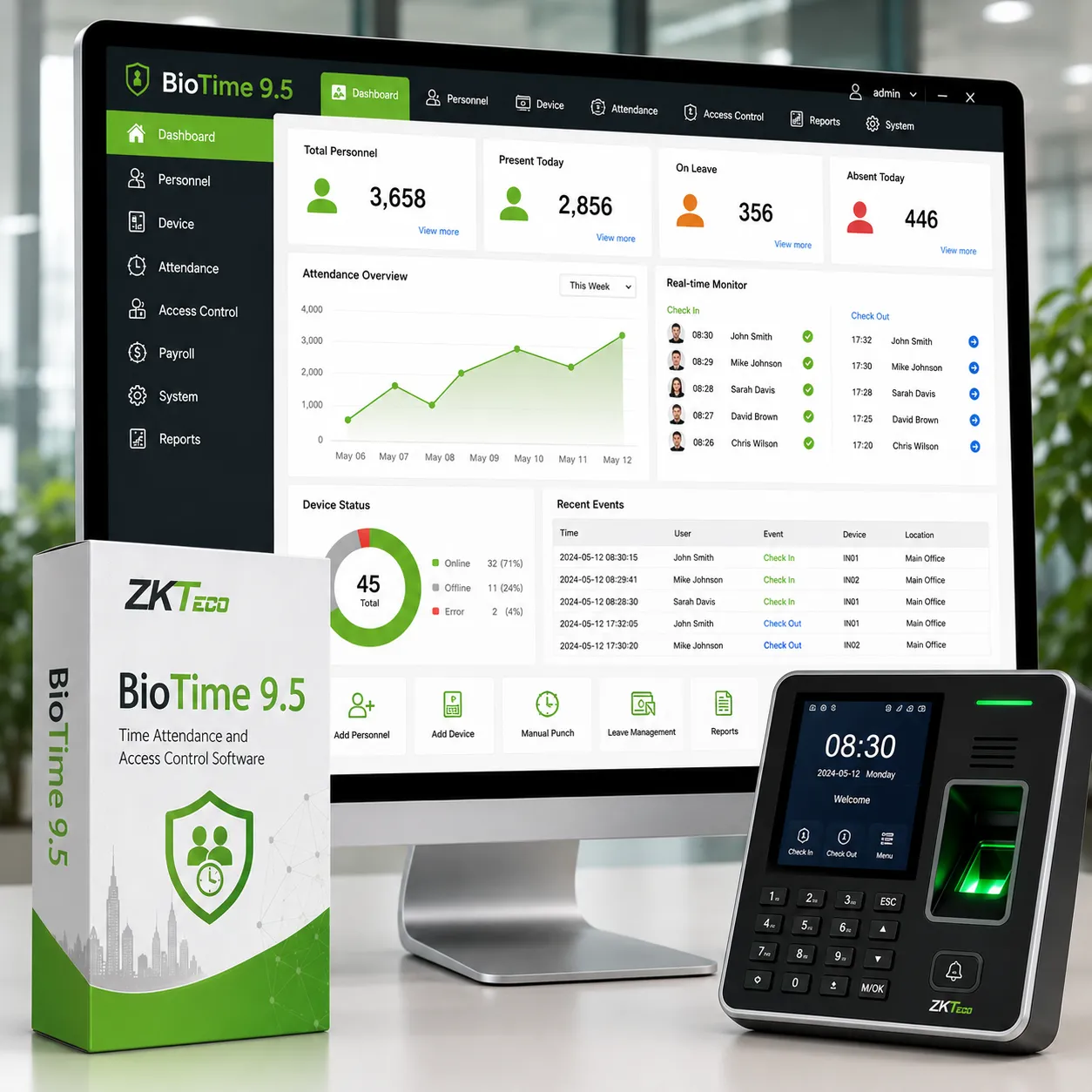
If you already run ZKTeco clocks, most models connect, including units managed in BioTime. Hikvision and Dahua face terminals and RFID card readers work too. On farms and estates, face recognition avoids the read failures that worn or dirty fingers cause on fingerprint sensors. Send us your model numbers and we will confirm compatibility before you commit.

Does AITIME calculate NSSF, PAYE and Local Service Tax?

Not directly. The job of AITIME is to get the hours right: normal time, overtime, unpaid leave and absences for each employee. That data goes to your payroll system or accountant in Excel, CSV or through the API, and NSSF, PAYE and LST are worked out there. Returns to URA, NSSF remittances and LST payments stay with your finance team.

Will it work on farms and camps without reliable internet?

Yes. A terminal at a farm gate or a camp near Hoima can run for days without a connection, keeping every punch in its memory, and the app does the same on a phone. When signal returns, everything uploads with the original timestamps, so payroll still sees a complete month for every worker.

Can it handle camp rotations for oil projects in the Albertine region?

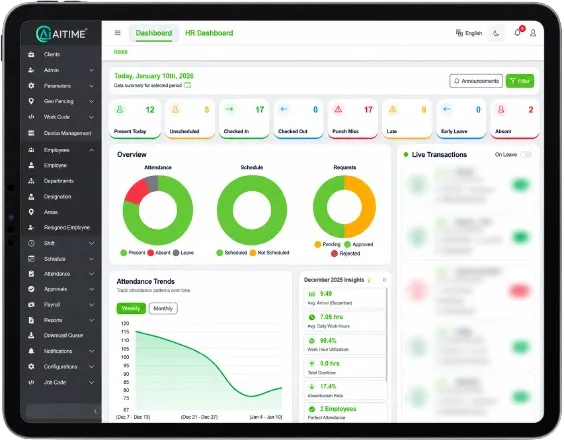
Yes. Rotation patterns such as 28 days on and 28 days off can be set per crew, and the dashboard shows who is on site, on their off rotation or due back. Contractor and visitor attendance can be recorded alongside direct employees for site reporting.

Do we need to register with the PDPO to use biometric attendance?

If your organisation collects or processes personal data, including staff fingerprints or face templates, the Data Protection and Privacy Act 2019 and its 2021 regulations require registration with the Personal Data Protection Office. You should also tell staff why the data is collected. AITIME helps with access controls and audit trails, but registration remains your responsibility.

Can we pay casual staff by mobile money using AITIME data?

AITIME does not send mobile money payments itself. It produces approved days, hours and overtime per worker, which export to Excel or CSV for your payroll system or the bulk payment tool your bank or mobile money provider offers. That keeps casual payments tied to verified attendance rather than handwritten lists.

How long does implementation take?

One office whose devices are already compatible is often live within a day. Organisations with farms, branches or camps tend to phase it: one site first, a parallel payroll run, then the rest. We handle configuration and training remotely by WhatsApp, phone and video, and on-site installation is something we can talk through during the demo.

Free demo & quote

Get your free demo for Uganda

A 20 minute live walkthrough using your own shift patterns and sites, followed by a written quote. No obligation.

No obligation. We usually reply within one business hour.

CallWhatsAppFree quote