Free demo · Book now

Time Attendance System logo

Kenya · East Africa

Attendance Software in Kenya

AITIME is attendance software for Kenya that brings biometric clocking, mobile check-ins and casual worker records into one place, applies Employment Act and wage order rules, and gives payroll clean hours for PAYE, NSSF, SHIF and the Housing Levy.

  • Free live demo
  • Arabic & English
  • Works with existing devices

Get a quote for Kenya

Share your headcount and sites. A specialist replies with a demo slot and pricing.

No obligation. We usually reply within one business hour.

In short

Attendance Software for Kenya: the short answer

AITIME is a time and attendance system for Kenyan employers. It takes punches from ZKTeco, Hikvision and Dahua fingerprint or face terminals and a GPS mobile app, applies Employment Act 2007 and wage order overtime at 1.5x and 2x, tracks casual workers and leave, and exports hours for PAYE, NSSF, SHIF and Housing Levy payroll. It suits farms, factories, EPZ firms and offices.

Last reviewed 3 November 2026 · AITIME implementation team

Kenya at a glance for HR teams

Governing law
Employment Act 2007, plus Regulation of Wages orders by sector
Normal working week
52 hours over six days under the General Wage Order; sector orders differ
Overtime pay
1.5x the hourly rate on normal days, 2x on rest days and public holidays
Weekly rest
At least one rest day in every seven days
Annual leave
21 working days after 12 consecutive months of service
Statutory deductions
PAYE (KRA), NSSF Tier I and II, SHIF 2.75%, Housing Levy 1.5% + 1.5%
Data protection
Data Protection Act 2019; ODPC registration; biometrics are sensitive data
Casual workers
A month of continuous work moves a casual onto monthly terms (Section 37)

Overview

From muster rolls to one attendance record across Kenya

Walk into most Kenyan workplaces and attendance runs on a mix of methods. A Nairobi head office has a fingerprint clock nobody has updated in years. A flower farm near Naivasha relies on a supervisor ticking a muster roll at 6am. A tea estate in Kericho pays pluckers from field registers, and an EPZ factory in Athi River copies device logs into Excel before payroll can start. Good attendance software in Kenya has to fix all of that at once, not just the office.

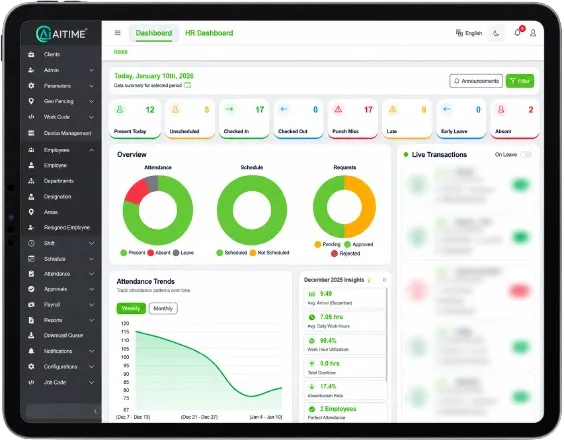
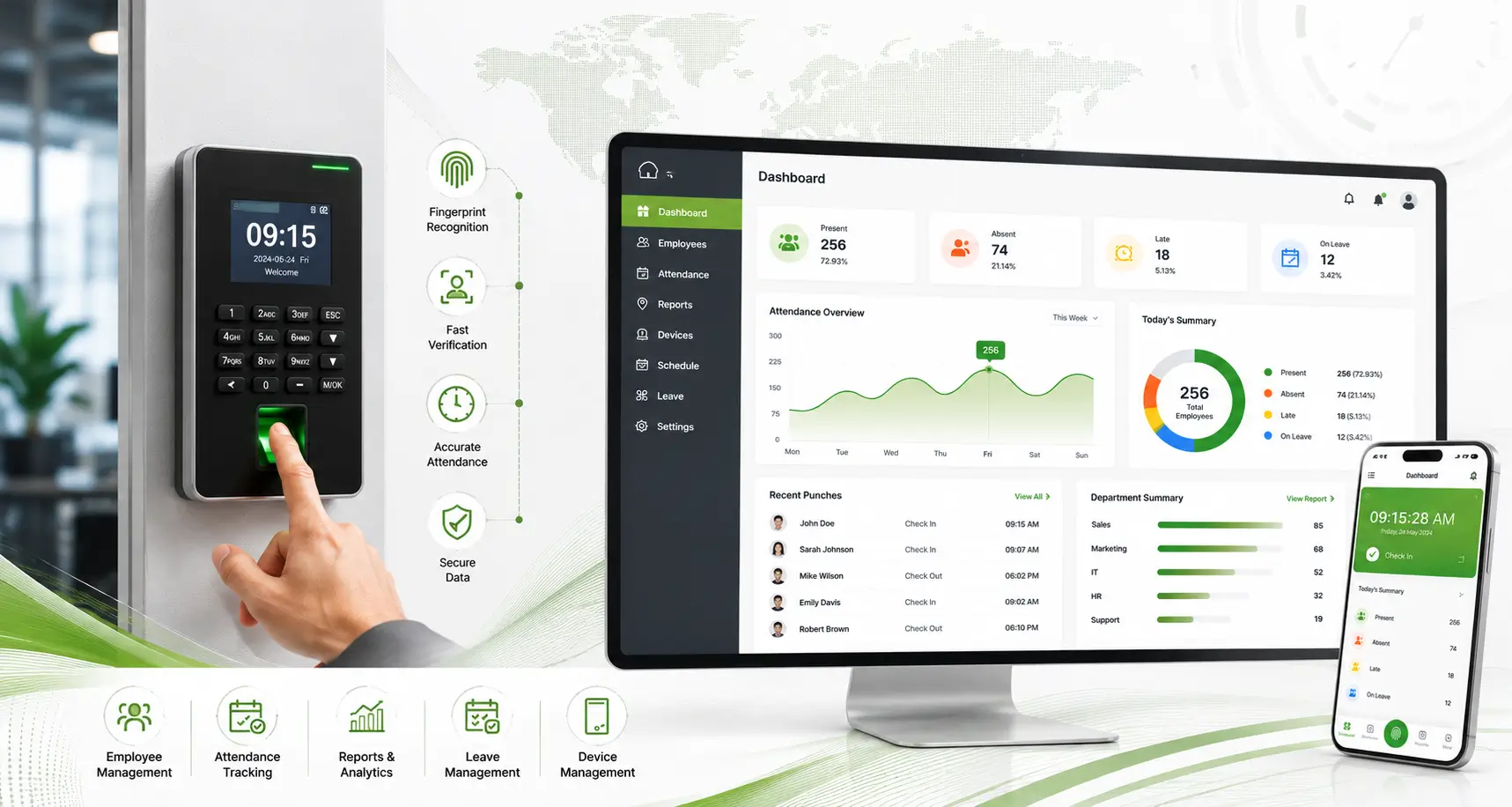
AITIME puts every punch in one place. Fingerprint and face terminals at farm gates and factory floors, the mobile app with GPS geofencing for field officers and sales reps, and RFID cards for visitors and contractors all land on the same timeline for each employee. Terminals keep recording when the network drops upcountry and sync with the original time once it returns.

The rules come next. Overtime is split into 1.5x for normal days and 2x for rest days and public holidays, leave accrues toward the 21 working days the Employment Act requires, and reports show which casual workers are nearing one month of continuous work. At month end, payroll receives approved hours, overtime and absences, ready for PAYE, NSSF, SHIF and Housing Levy calculations.

Most rollouts start with the devices you already own. We connect them remotely, import staff from your payroll export and run one pay cycle side by side with the old process before switching over. Setup, training and support happen over WhatsApp, phone and video, and on-site installation can be discussed during the demo.
Book a free demo

Features

What you get in Kenya

Clocking terminals for gates and floors

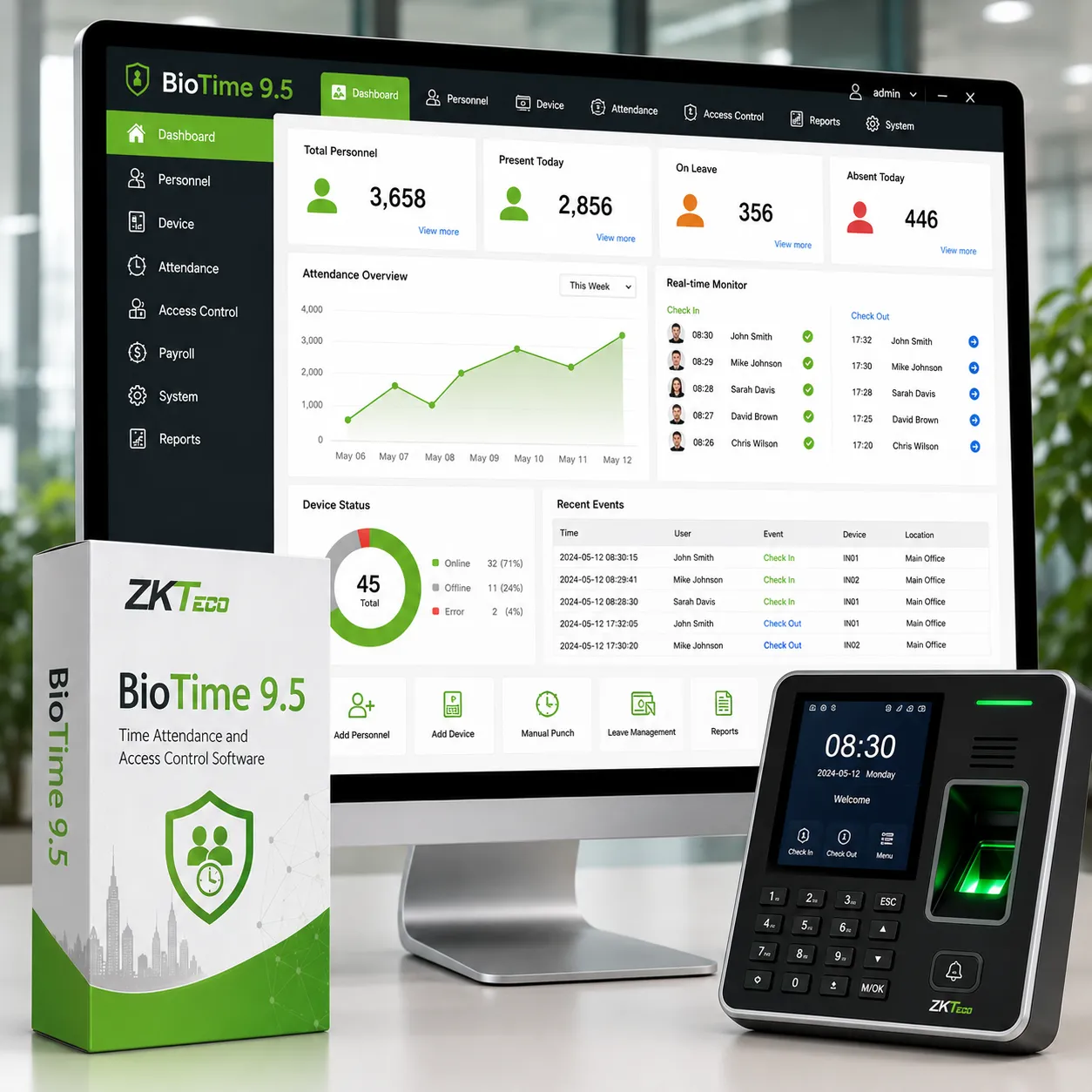
Connect ZKTeco, Hikvision and Dahua fingerprint or face terminals at factory gates, pack houses and offices. Kenyan teams already running BioTime or older ZKTeco clocks can usually keep them and point them at AITIME.

Casual and seasonal worker tracking

Enrol casual pluckers, packers and loaders on a face terminal in minutes. Daily attendance and continuous days worked are recorded per person, so HR can see who is nearing the Section 37 one-month mark before it passes.

Offline capture for upcountry sites

Tea estates, farms and construction sites outside town often lose signal or power. Terminals and the app keep storing punches locally and sync them with the original timestamps once the connection is back, so no day goes missing.

Wage order hours and overtime

Set the normal week from the General Wage Order or your sector order, then let AITIME split extra time into 1.5x and 2x hours. Night shifts, six-day weeks and rotating rosters are all supported.

Payroll inputs for Kenyan deductions

Approved hours, overtime, unpaid leave and absences export to Excel, CSV or API for your payroll system, which then calculates PAYE, NSSF, SHIF and the Affordable Housing Levy on accurate gross pay.

Farms, factories and offices together

Run a Nairobi head office, a Naivasha farm and an Athi River EPZ unit as separate branches or companies, each with its own calendar, rules and payroll export, while management sees one dashboard.

Compliance

Kenyan employment and payroll rules that depend on attendance

Private employers in Kenya work under the Employment Act 2007 and the Regulation of Wages orders made under the Labour Institutions Act 2007. AITIME turns the attendance-dependent parts of those rules into settings, so pay is built on verified hours rather than estimates.

  1. 01

    Hours and overtime under the wage orders

    The General Wage Order sets a normal week of 52 hours over six days, while sector orders such as the agricultural order set their own. Overtime is paid at 1.5 times the hourly rate on normal days and twice the rate on rest days and public holidays. AITIME tags every overtime minute with its rate.

  2. 02

    Annual, sick and family leave

    Employees earn at least 21 working days of annual leave after 12 consecutive months. The Act also provides paid sick leave after two months of service, three months of maternity leave and two weeks of paternity leave. Leave types and balances are configured to match, and staff apply from the app.

  3. 03

    Casual employment conversion

    Under Section 37 of the Employment Act, a casual who works continuously for the equivalent of a month is treated as a monthly-paid employee with full protections. Daily records show exactly how many continuous days each casual has worked, which matters for planning and for any dispute at the Employment and Labour Relations Court.

  4. 04

    Statutory deductions from gross pay

    Payroll deducts PAYE for KRA, NSSF contributions under the NSSF Act 2013, SHIF at 2.75% of gross salary for the Social Health Authority, and the Affordable Housing Levy at 1.5% from both employee and employer. Each one follows gross pay, so overtime and unpaid days recorded in AITIME change the numbers.

  5. 05

    Data protection and ODPC registration

    Fingerprints and face templates are sensitive personal data under the Data Protection Act 2019. Employers that meet the registration thresholds must register with the Office of the Data Protection Commissioner, and biometric processing calls for a data protection impact assessment. Role-based access and audit trails support both duties.

Industries

Industries we serve in Kenya

Talk to an attendance specialist about Kenya

Tell us how many people you employ, where they work and which devices you already own. We will map the rules, devices and payroll output before you commit.

Coverage

Where we support Kenyan employers

Setup, training and support are delivered remotely to companies across Kenya, including farms, EPZs and upcountry branches:

  • Nairobi
  • Mombasa
  • Kisumu
  • Nakuru
  • Eldoret
  • Thika
  • Naivasha
  • Kericho
  • Nanyuki
  • Athi River EPZ
  • Tatu City
  • Machakos
  • Nyeri
  • Malindi

FAQs · Kenya

Questions buyers ask us

Cannot see your question? Message us and a specialist will answer the same day.

Ask on WhatsApp

How much does attendance software cost in Kenya?

Three things drive the price: how many people you clock, how many sites and terminals are involved, and which modules you switch on, such as payroll or the mobile app. A flower farm with hundreds of seasonal workers at one gate needs a different setup from a 40-person office with five branches. Tell us your headcount and sites through the form and we will put a written quote together.

Can we keep our existing biometric clocking machines?

In most cases, yes. AITIME connects to most ZKTeco models, including those already running BioTime, plus Hikvision and Dahua face terminals. Share the model numbers before the demo and we will confirm what can be reused and whether any site needs an extra terminal.

Does AITIME handle Kenya's PAYE, SHIF and Housing Levy deductions?

AITIME produces the attendance side accurately: hours, overtime at 1.5x and 2x, unpaid leave and absences. Those figures, along with deduction inputs, export to your payroll system or accountant in Excel, CSV or through the API, where PAYE, NSSF, SHIF and the Affordable Housing Levy are calculated and filed. AITIME does not file returns with KRA directly.

How does the system handle casual workers?

Casuals are enrolled like any other worker, usually on a face terminal so no cards go missing. Each day they work is recorded against their name, and reports show continuous days worked. That helps you plan around the Section 37 rule, under which a casual working continuously for a month moves onto monthly terms.

Will clocking work on farms with poor network or power cuts?

Yes. Terminals store punches in their own memory and the mobile app records check-ins without data. Records sync with the original timestamp when the connection returns. For sites where power cuts are frequent, fit each terminal with a small UPS or battery backup so the device itself stays on.

Is biometric attendance allowed under the Data Protection Act 2019?

Yes, if it is handled properly. Biometric data is sensitive personal data, so employers should tell staff why it is collected, limit access, assess the risk in a data protection impact assessment and register with the ODPC where the thresholds apply. AITIME supports this with role-based access and audit trails showing who viewed or changed each record.

How long does implementation take?

A single office or factory with compatible devices can often go live in about a day. Multi-site rollouts across farms, depots and branches are done in phases, usually one site first with a parallel payroll run. Setup and training are delivered remotely over WhatsApp, phone and video, and on-site installation can be discussed during the demo.
Does it follow the Kenyan public holiday calendar?

Yes. Holidays such as Madaraka Day, Mashujaa Day and Jamhuri Day sit in the holiday calendar, and moon-dependent dates like Idd ul-Fitr can be confirmed once the government gazettes them. Hours worked on a public holiday are then paid at the 2x rate without anyone editing timesheets.

Free demo & quote

Get your free demo for Kenya

A 20 minute live walkthrough using your own shift patterns and sites, followed by a written quote. No obligation.

No obligation. We usually reply within one business hour.

CallWhatsAppFree quote