Free demo · Book now

Time Attendance System logo

Biometric hardware · Saudi Arabia

Biometric Attendance System in Saudi Arabia

Choose and connect the right biometric attendance system for Saudi Arabia: face, fingerprint or card terminals placed where staff actually start work, feeding one record that becomes Mudad-ready payroll data.

  • Free live demo
  • Arabic & English
  • Works with existing devices

Get a quote for Saudi Arabia

Share your headcount and sites. A specialist replies with a demo slot and pricing.

No obligation. We usually reply within one business hour.

In short

Biometric Attendance System for Saudi Arabia: the short answer

A biometric attendance system in Saudi Arabia pairs fingerprint, face recognition or RFID card terminals with software that turns punches into payable hours. AITIME connects ZKTeco, Hikvision, Dahua and AITime devices at offices, camps and project gates, works offline, applies Saudi Labor Law overtime and Ramadan rules, and prepares Mudad-ready payroll data, treating biometric templates as sensitive data under the PDPL.

Last reviewed 3 November 2026 · AITIME implementation team

Saudi Arabia at a glance for HR teams

Biometric data law
PDPL classes biometric data as sensitive personal data
Regulator
SDAIA; PDPL fully enforced since September 2024
Hours to capture
8 a day, 48 a week; 6 a day in Ramadan for Muslim workers
Overtime basis
Hourly wage plus 50% of basic hourly wage, from punch data
Payroll link
Approved hours feed Mudad wage protection reporting
Summer heat
Outdoor work banned 12pm to 3pm, 15 June to 15 September
Common brands
ZKTeco, Hikvision and Dahua terminals are widely installed
Typical placement
Offices, camp exits, site gates and bus loading points

Overview

Choosing biometric attendance hardware that survives Saudi conditions

Most companies searching for a جهاز بصمة start with a price and a model number. The harder questions come later. Will a fingerprint reader work for masons and mechanics whose fingers are cut and coated in cement? Can 400 workers leaving a camp at 5am clock out before the bus departs? Will a terminal at a site gate in Riyadh or Jubail survive August sun and dust storms? A biometric attendance system in Saudi Arabia is only as good as the answers to those questions.

For offices, a fingerprint or face terminal at reception usually does the job. For camps, plants and construction sites, face recognition terminals with liveness detection are faster and cope better with worn fingers, gloves and dust. RFID cards suit visitors or areas where biometrics are not wanted. AITIME connects all three types from ZKTeco, Hikvision, Dahua and AITime, and if you already run BioTime or ZKBio CVSecurity, your compatible devices can usually be reused.

Hardware is only the first step. Every punch lands in one record per employee, where Saudi Labor Law rules apply: normal and overtime hours, 6-hour Ramadan days for Muslim workers, Friday rest and the summer midday ban. Approved hours then become Mudad-ready payroll data. Because fingerprints and face templates are sensitive data under the PDPL, access is limited by role and every change is logged.

A typical project starts with a site survey on a video call covering device locations, power, network and expected queue sizes at shift change. Setup, enrolment guidance, training and support are delivered remotely, and on-site installation for larger estates can be discussed during the demo.
Book a free demo

Features

What you get in Saudi Arabia

Face recognition with liveness detection

Face terminals with liveness detection check for a real person rather than a printed photo or a phone screen, and clear queues at camp exits and shift changes quickly. They also suit workers whose fingerprints are worn by cement, steel or chemicals.

Fingerprint readers for offices and branches

Fingerprint terminals remain an economical choice for offices, showrooms and clinics with stable staff numbers. Models with fake-finger detection reduce the chance of silicone or printed copies being used for buddy punching.

Placement for heat, dust and sun

Mount terminals in shade, away from direct afternoon sun, and use sealed or IP-rated housings at outdoor gates. Good placement in Riyadh dust, Jeddah humidity and Eastern Province heat matters as much as the model you buy.

Keep your ZKTeco and Hikvision devices

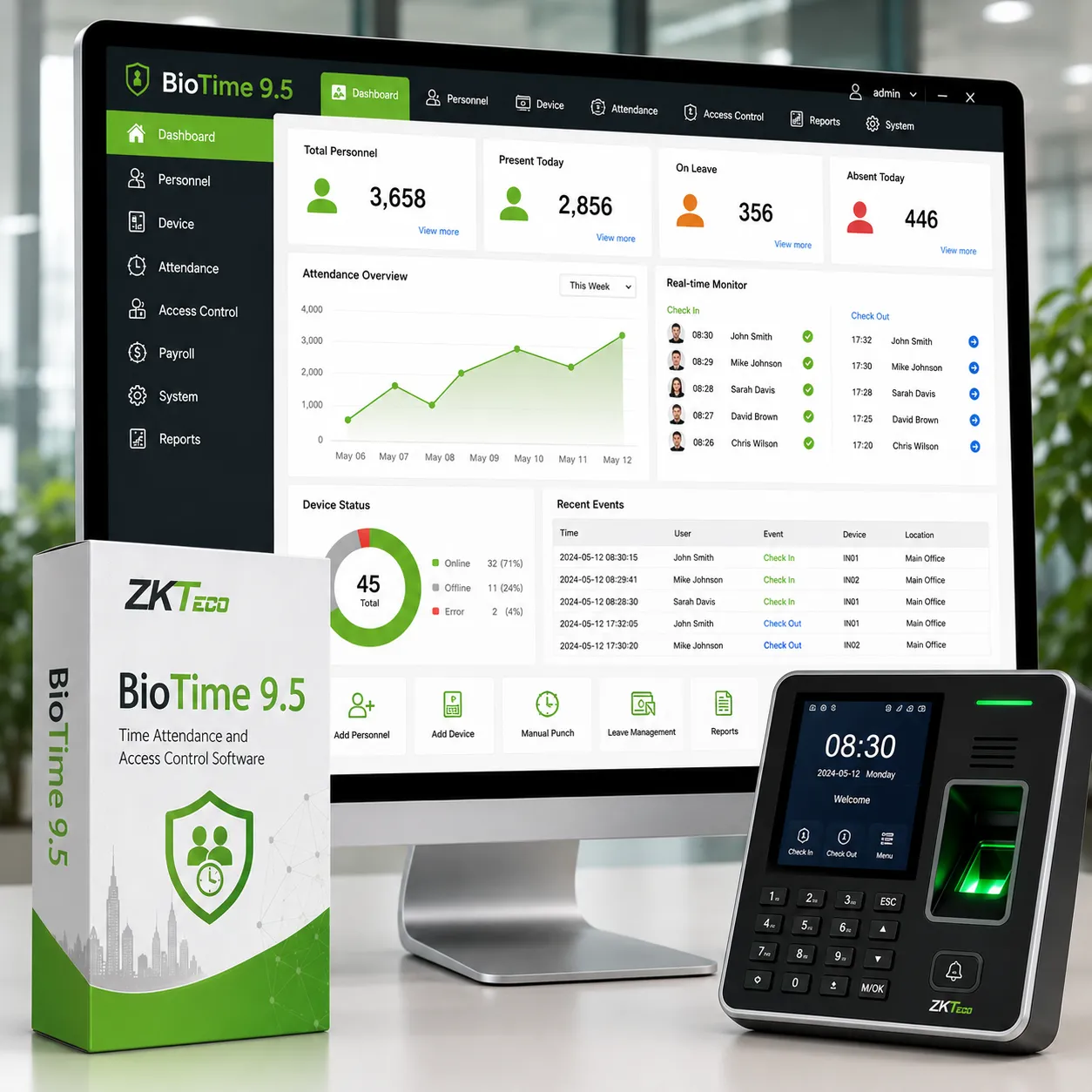
AITIME works with ZKTeco terminals, BioTime and ZKBio CVSecurity, Hikvision face terminals and Dahua devices. We review your model list during the demo and confirm which machines can stay before you buy anything new.

Enrolment planned around Iqama numbers

Use the Iqama or employee number as the ID on every terminal, so each punch matches the right payroll record. Enrolment for a new camp or site can be run as one planned session, and leavers are deactivated centrally.

From punch to Mudad-ready payroll

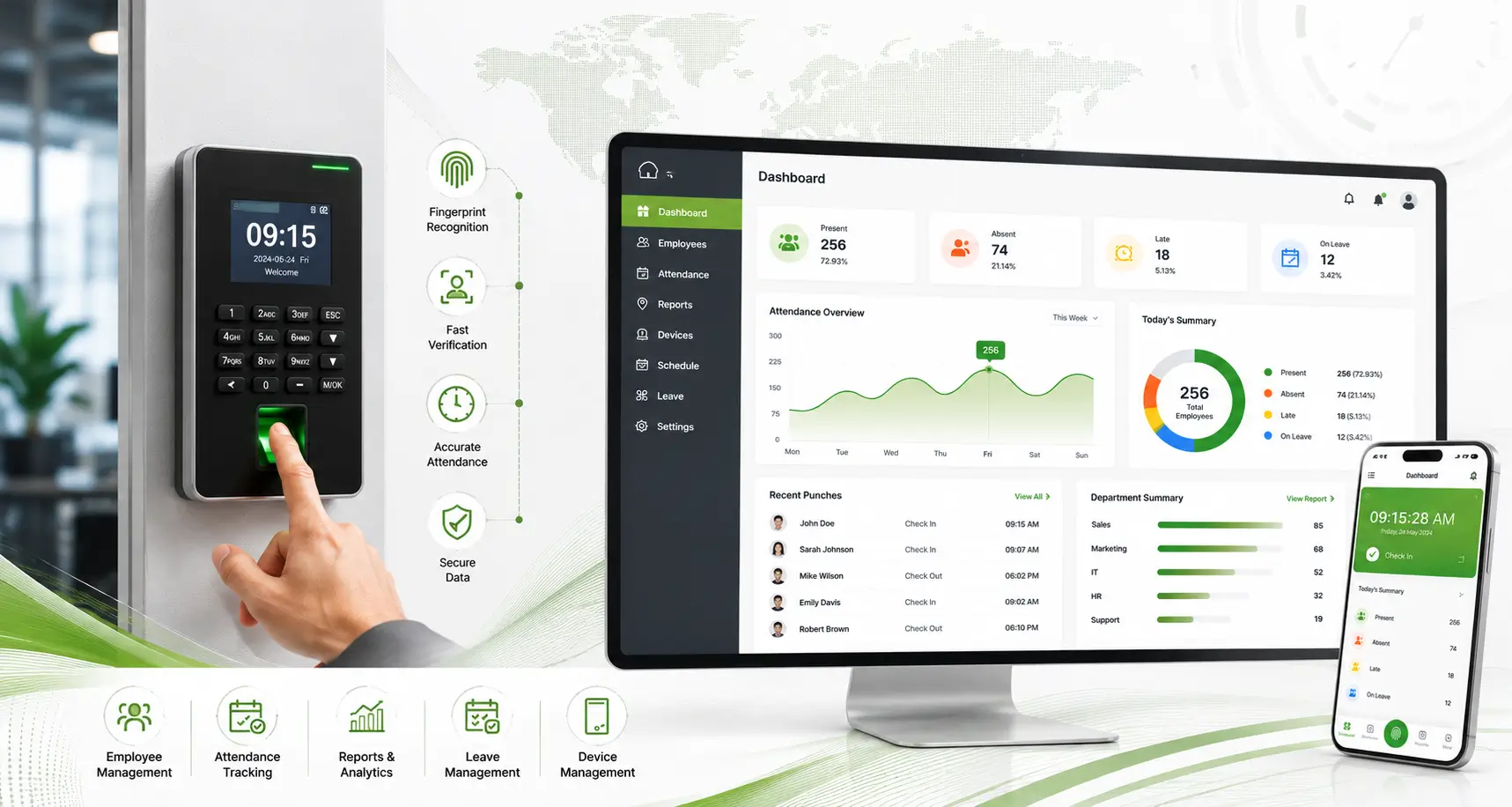
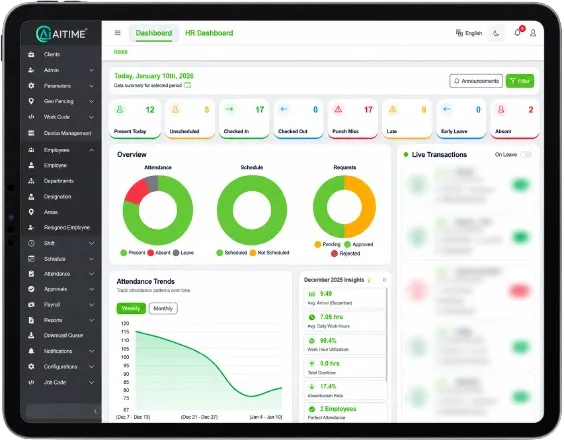
Biometric punches are paired into shifts, checked against rosters and approved by supervisors. Hours, overtime and absences then flow into payroll data organised for your Mudad upload, with no retyping between the device and the salary sheet.

Compliance

Rules that shape a biometric attendance system in Saudi Arabia

Biometric terminals collect sensitive data and produce the hours that wages are paid on, so two sets of rules apply: the PDPL for the data and the Saudi Labor Law for the hours. AITIME is set up to respect both from the first enrolment.

  1. 01

    Biometric data is sensitive data

    The Personal Data Protection Law lists biometric data that identifies a person as sensitive personal data. Employers should have a clear purpose, tell staff how templates are used and stored, and keep access tight. AITIME limits access by role and logs every change in an audit trail.

  2. 02

    Purpose, retention and transfers

    Collect only what attendance needs and keep it no longer than required. The PDPL and its regulations also govern transfers of personal data outside the Kingdom, so ask any provider, including us, where templates and attendance logs are stored before you sign.

  3. 03

    Hours that hold up in a dispute

    Wage and overtime disputes are decided on records. Timestamped biometric punches, supervisor approvals and an audit trail show exactly when someone started and finished, which matters when overtime is owed at the hourly wage plus 50% of the basic hourly wage.

  4. 04

    Ramadan and summer heat rules

    During Ramadan, Muslim workers are limited to 6 hours a day, and from 15 June to 15 September outdoor work in direct sun stops between 12pm and 3pm. Because punches show actual times, AITIME can check worked hours against both rules automatically.

  5. 05

    Payroll reporting on Mudad

    Salaries must be paid through banks and reported on Mudad each month. When the hours behind each salary come from verified biometric punches, the figures you upload are easier to explain if a mismatch between reported and paid wages is ever queried.

Talk to an attendance specialist about Saudi Arabia

Tell us how many people you employ, where they work and which devices you already own. We will map the rules, devices and payroll output before you commit.

Coverage

Cities and industrial zones we work with

AITIME connects biometric terminals across the Kingdom, from city offices to remote industrial sites, with remote setup and support:

  • Riyadh
  • Riyadh 2nd Industrial City
  • Sudair Industrial City
  • Jeddah
  • Jeddah Industrial City
  • Makkah & Madinah
  • Dammam & Al Khobar
  • Jubail Industrial City
  • Yanbu Industrial City
  • Ras Al Khair
  • Tabuk & NEOM
  • Abha & Khamis Mushait
  • Jazan
  • Al Qassim

جهاز بصمة الحضور والانصراف في السعودية

يبحث كثير من أصحاب الأعمال عن جهاز بصمة للحضور والانصراف، لكن الاختيار الصحيح يعتمد على مكان التركيب وعدد العمال وظروف الحرارة والغبار. يعمل AITIME مع أجهزة البصمة والتعرّف على الوجه والبطاقات من ZKTeco وHikvision وDahua، ويمكن غالباً الاستفادة من الأجهزة الموجودة لديك. تتحوّل البصمات إلى ساعات عمل وعمل إضافي وفق نظام العمل السعودي، ثم إلى بيانات رواتب متوافقة مع منصة مدد، مع التعامل مع البيانات الحيوية كبيانات حساسة وفق نظام حماية البيانات الشخصية.

FAQs · Saudi Arabia

Questions buyers ask us

Cannot see your question? Message us and a specialist will answer the same day.

Ask on WhatsApp

What is the price of a biometric attendance machine in Saudi Arabia?

It depends on the terminal type (fingerprint, face or card), how many devices you need, outdoor housings, cabling and network work, and the software modules and headcount on top. Reusing compatible ZKTeco or Hikvision devices lowers the cost considerably. Tell us your sites and headcount through the form and we will send a written quote.

Is a biometric attendance system in Saudi Arabia better with fingerprint or face recognition?

Fingerprint readers are economical and work well in offices and branches. Face recognition is faster at busy entrances, touchless, and more reliable for workers with worn, dirty or gloved hands, which makes it the usual choice for camps, plants and construction sites. Many companies mix both in one AITIME account.

Can we keep our existing ZKTeco or Hikvision attendance machines?

In most cases, yes. AITIME connects to ZKTeco terminals, including BioTime and ZKBio CVSecurity setups, Hikvision face terminals, Dahua devices and AITime terminals. Send us your model numbers before the demo and we will confirm which units can be reused and whether any firmware or network changes are needed.

Is biometric attendance allowed under Saudi data protection law?

Yes, but biometric data is sensitive personal data under the PDPL, so it needs a clear purpose, a privacy notice to staff, limited access and sensible retention. AITIME supports this with role-based access and an audit trail. Your legal or compliance team should confirm the notice and retention policy for your company.

Do terminals work without internet at camps and sites?

Yes. Terminals keep punches in local memory and the AITIME mobile app records check-ins offline. When the network returns, everything syncs with the original timestamps, so remote camps, desert sites and plants with patchy coverage still produce complete attendance for payroll.

How are hundreds of workers enrolled quickly?

Plan enrolment as a session at the camp or site, with employees queued by crew and identified by Iqama or employee number. Face enrolment takes seconds per person on most terminals. Records are matched to the employee list imported into AITIME, so each new punch lands on the right payroll record.

How long does installation take?

A single office with compatible devices can often go live in about a day. Camps and multi-site projects are planned around device locations, power and network, then rolled out site by site. Setup, configuration and training are delivered remotely, and on-site installation can be discussed during the demo.

How do biometric punches reach Mudad payroll?

Punches are paired into shifts, checked against rosters and approved by supervisors. AITIME then calculates normal hours, overtime and absences under the Saudi Labor Law and prepares Mudad-ready payroll data, which your team uploads to Mudad as part of the normal monthly salary process.

Free demo & quote

Get your free demo for Saudi Arabia

A 20 minute live walkthrough using your own shift patterns and sites, followed by a written quote. No obligation.

No obligation. We usually reply within one business hour.

CallWhatsAppFree quote