The right method for each workplace
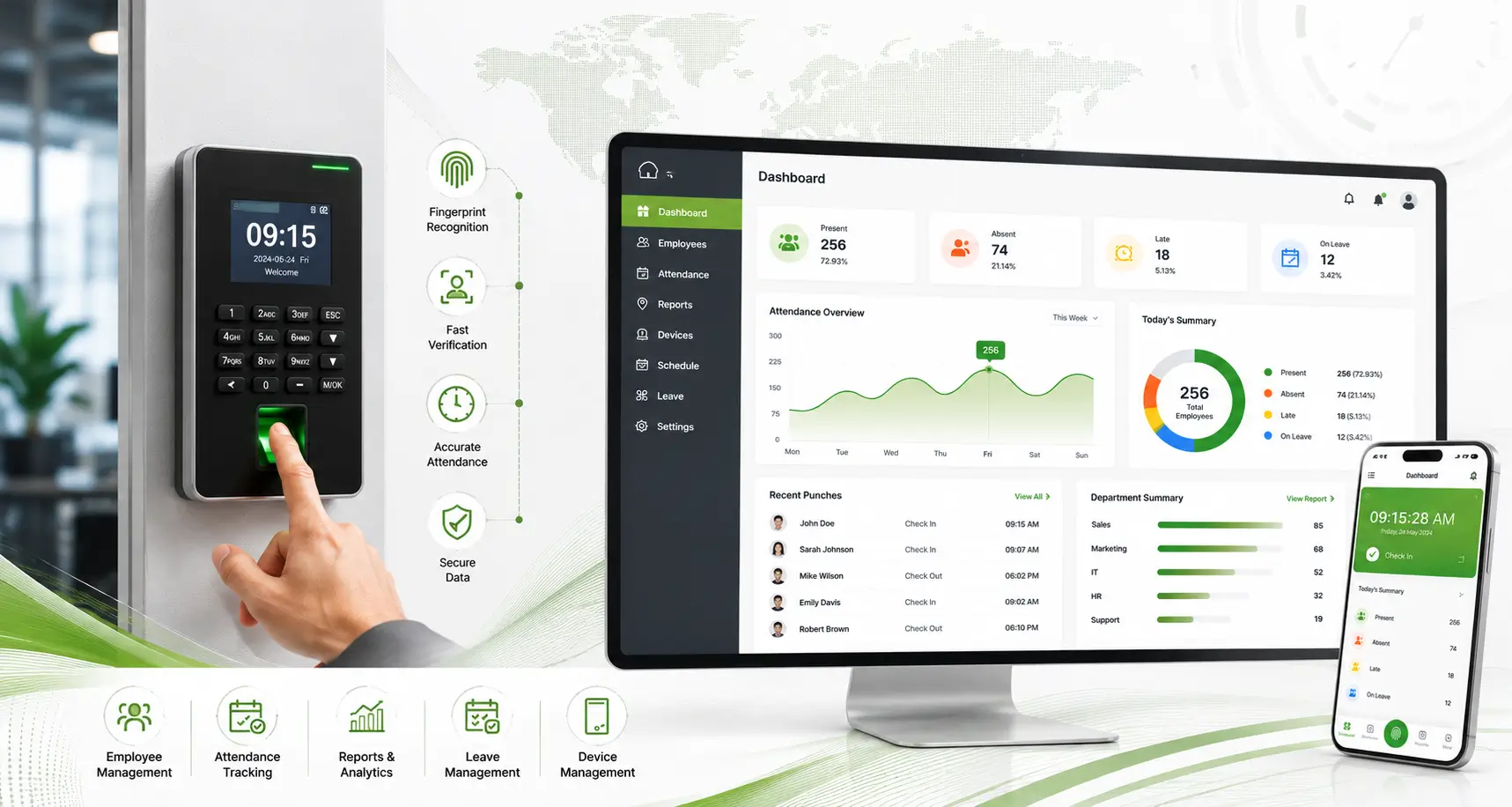
Fingerprint for offices and shops, face recognition for lobbies, clinics and camp gates, RFID cards for workshops where gloves are standard. Every method feeds the same employee timeline in AITIME.
Free demoFree demo for teams across the UAE, GCC & Africa · Book now
Biometric attendance · Kuwait
AITIME runs your biometric attendance system in Kuwait: fingerprint, face and card terminals at offices, workshops and oil-sector contractor camps, connected to one cloud record that applies Kuwait Labour Law and keeps working offline.
Get a quote for Kuwait
Share your headcount and sites. A specialist replies with a demo slot and pricing.
In short
A biometric attendance system in Kuwait combines fingerprint, face or RFID card terminals with software that converts punches into payroll hours. AITIME connects ZKTeco, Hikvision, Dahua and AITime devices, stores punches offline at contractor camps in Ahmadi and other remote sites, and applies Private Sector Labour Law No. 6 of 2010 hours, overtime and the summer outdoor ban.
Last reviewed 3 November 2026 · AITIME implementation team
Overview
Many Kuwait businesses bought their first attendance machine from a supplier in Hawally or Shuwaikh, mounted it by the entrance and left it there for years. Then the company grows, adds a warehouse in Sabhan or a contract in Ahmadi, and each new device brings its own PC software. Logs move by USB stick, overtime is counted in Excel and nobody is sure which device clock is right. A biometric attendance system in Kuwait should end that, not repeat it.
AITIME connects every terminal to one cloud record. Face recognition suits tower lobbies, clinics, kitchens and crowded camp gates. Fingerprint terminals stay economical for offices and shops. RFID cards work where gloves or damaged fingers make biometrics unreliable, such as fabrication yards. The GPS mobile app covers staff who never pass a terminal. Enrolment runs in batches by shift, so large sites do not stop work to register staff.
Kuwait's climate decides where devices go. Summer afternoons regularly pass 45°C and dust storms can blow for days, so outdoor terminals belong in shade, under a canopy or inside a gatehouse, never facing direct sun. At oil-sector contractor camps near Ahmadi, Burgan or the northern fields, terminals must also hold punches offline when the network drops, then upload them with original timestamps.
The data still serves the Labour Law: 8-hour days, 48-hour weeks, overtime premiums and the 11am to 4pm summer ban all depend on accurate punches. AITIME protects biometric records with role-based access and an audit trail. Configuration and training happen remotely by WhatsApp, phone and video, with on-site installation open for discussion during the demo.
Features
Fingerprint for offices and shops, face recognition for lobbies, clinics and camp gates, RFID cards for workshops where gloves are standard. Every method feeds the same employee timeline in AITIME.
Contractor buses arrive together at shift change. Face terminals verify each worker without contact and several devices can share one gate, which keeps queues short in the heat. Many supported models include liveness checks against photo spoofing.
We advise mounting in shade or indoors, away from direct sun and blowing sand, with protected cabling and power. In summer, avoid layouts where workers must queue outside during the hottest hours.
Camps and site offices serving oilfields in Ahmadi and the north often have unstable links. Terminals keep punches in memory and upload them with original timestamps, so rotation hours and contractor invoices stay complete.
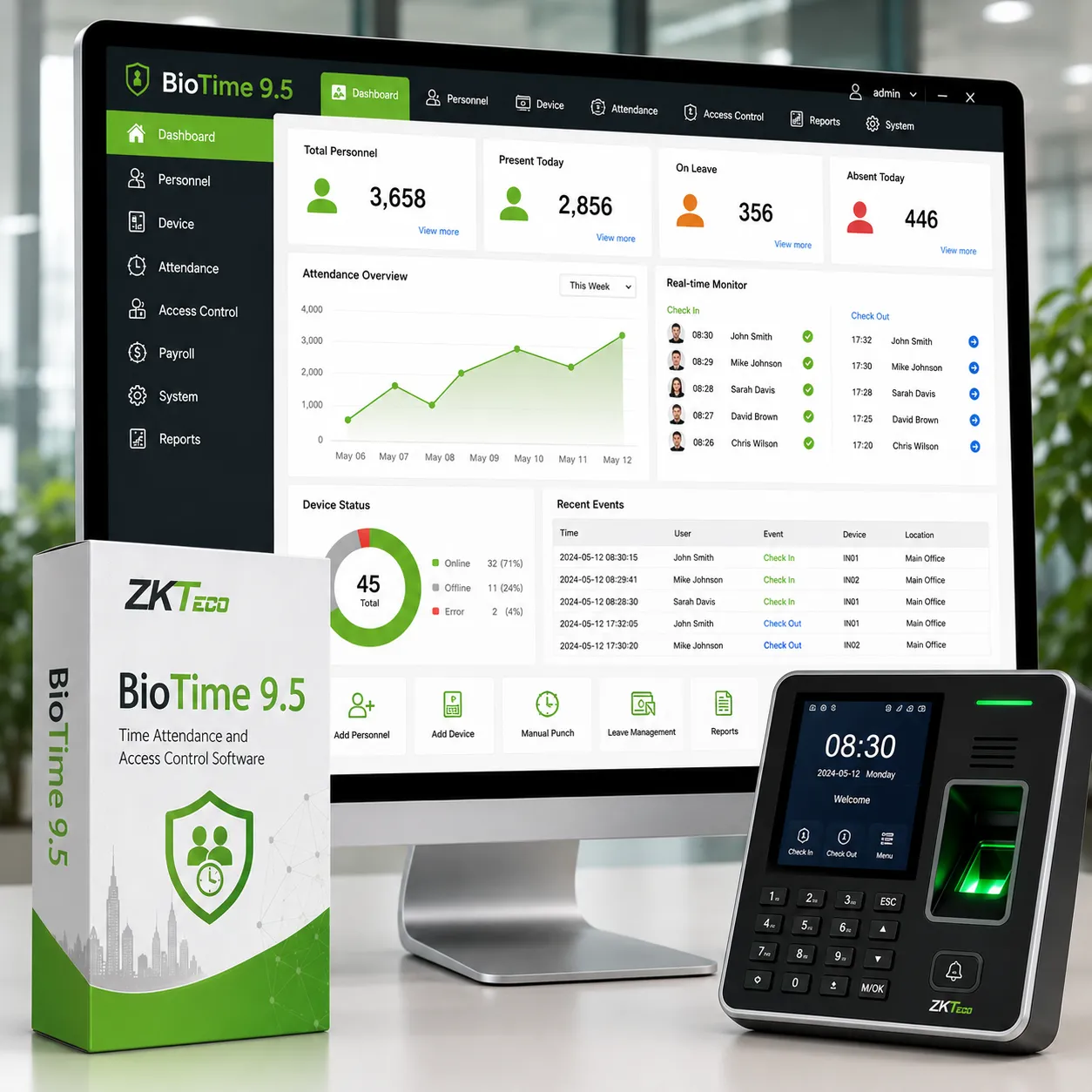
Connect ZKTeco devices directly or through BioTime and ZKBio CVSecurity, plus Hikvision, Dahua and AITime terminals. Existing compatible machines can usually stay in place, and new ones are added only where needed.
Role-based access limits who can see biometric and attendance data, and the audit trail logs every view, edit and export. That supports your internal policy and Kuwaiti privacy expectations for sensitive data.
Compliance
Biometric punches are only useful if they prove what the law requires. In Kuwait that means working-hour limits, overtime premiums and the summer outdoor ban under Law No. 6 of 2010, plus careful handling of the biometric data itself.
Normal hours are limited to 8 a day and 48 a week, with at least a one-hour break after 5 consecutive hours, and 36 hours a week during Ramadan. Biometric in and out punches give each of these limits a verified record.
Overtime is paid at the wage plus 25% and capped at 2 hours a day, with higher premiums for rest days and public holidays. Accurate punches make each overtime hour traceable if an employee or a PAM inspector questions it.
Outdoor work is banned from 11am to 4pm between 1 June and 31 August. Terminals at site offices record when crews stopped and restarted, giving contractors dated evidence for each outdoor location if PAM inspectors visit.
Oil-sector clients often expect contractors to show who was on site and for how long. Enrolling each subcontractor as its own company keeps those records separate and easy to export by contract, site and date.
Treat fingerprints and face templates as sensitive data in line with Kuwait's E-Transactions Law and CITRA's Data Privacy Protection Regulation. Tell employees why you collect them, limit access to named roles and delete records you no longer need.
Industries
Contractor camps and site offices around Ahmadi, Burgan and the northern fields, with offline terminals and rotation hours.
ExploreFace terminals at site offices and summer ban evidence for outdoor crews on every project.
ExplorePlants in Shuaiba and Sabhan using card or face terminals at shift change.
ExploreHospitals and clinics where touchless face recognition supports hygiene on 24-hour rosters.
ExploreGuards at client sites checking in by terminal or geofenced mobile app.
ExploreOutlets and central kitchens where face recognition avoids contact with food-handling hands.
ExploreTell us how many people you employ, where they work and which devices you already own. We will map the rules, devices and payroll output before you commit.
Coverage
Device configuration and support are delivered remotely by WhatsApp, phone and video, and on-site installation can be discussed during the demo, across:
يعمل AITIME مع أجهزة البصمة والتعرّف على الوجه وبطاقات RFID من ZKTeco وHikvision وDahua في المكاتب والورش ومخيمات المقاولين في الأحمدي. ننصح بتركيب الأجهزة في أماكن مظللة بعيداً عن أشعة الشمس المباشرة والغبار، وتواصل الأجهزة تسجيل الحضور دون إنترنت ثم تُزامن البيانات بتوقيتها الأصلي. ويعتمد السعر على عدد الأجهزة ونوعها وعدد المواقع والموظفين. اطلب عرض سعر مجاناً.
FAQs · Kuwait
Cannot see your question? Message us and a specialist will answer the same day.
Ask on WhatsAppThe price depends on the number and type of terminals, how many sites and employees you have, and which software modules you choose. Face terminals and outdoor enclosures cost more than a basic fingerprint unit, while reusing compatible machines saves money. Send your site list and headcount for a written quote.
Fingerprint terminals are economical for clean, indoor offices and shops. Face recognition works without touch, handles dusty or worn hands better and moves crowds faster at camp and plant gates. A common pattern is fingerprint at head office and face at operational sites, all in one AITIME account.
Usually, yes. AITIME supports most ZKTeco models, including BioTime and ZKBio CVSecurity setups, plus Hikvision, Dahua and AITime terminals. Send us the model names and we will confirm which devices connect, which need a firmware check and where new terminals would help.
Yes. Terminals store punches in memory when the link drops, which happens at camps and site offices in Ahmadi and the northern fields. When the connection returns, every record uploads with its original timestamp, so rotation reports and contractor hours stay complete.
Place terminals indoors, inside a gatehouse or under a solid canopy, never facing the afternoon sun. Keep them away from doorways where dust blows straight in, protect power and network cables, and avoid layouts that force workers to queue outside at midday in summer.
Yes. When outdoor crews punch out before 11am and back in after 4pm at a site terminal, you have a dated record that the break was respected between June and August. AITIME also warns planners when an outdoor roster crosses the banned window.
AITIME uses role-based access, so each manager sees only their own team, and an audit trail logs every view, change and export. Combine that with a clear notice to employees about why biometrics are collected and how long records are kept.
Where the devices are already compatible, a single office can often be live in about a day. On larger sites, enrol staff in batches by shift so queues stay short. Configuration and training are delivered remotely, and on-site installation for camps or multi-site projects can be discussed during the demo.
Free demo & quote
A 20 minute live walkthrough using your own shift patterns and sites, followed by a written quote. No obligation.