Terminals for mills and workshops
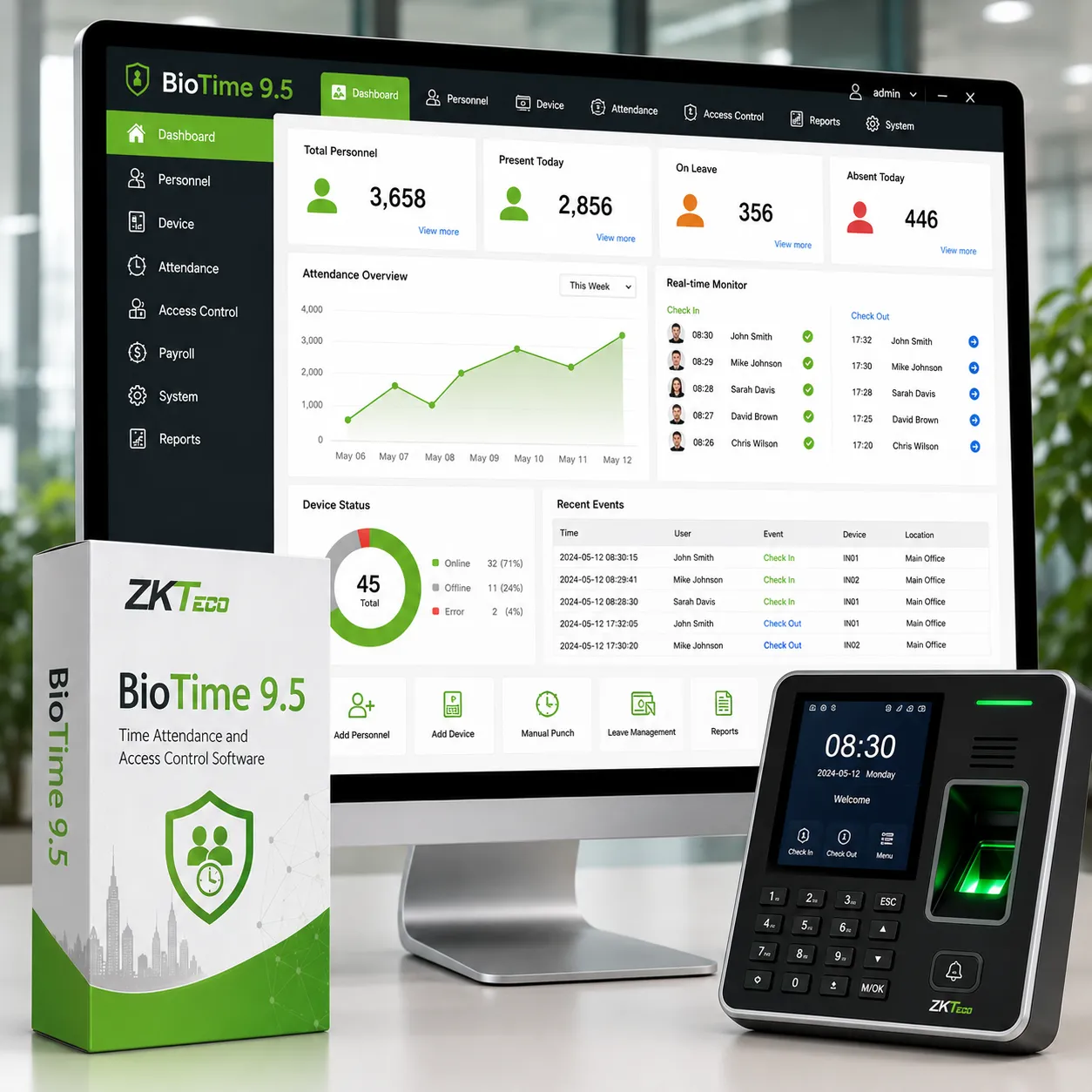
Fingerprint and face terminals at sawmill gates and workshop entrances in Sokoban, Kaase and Suame Magazine replace signing books, so each punch is tied to the worker who was actually there that morning.
Free demoFree demo for teams across the UAE, GCC & Africa · Book now
Kumasi · Ashanti Region · Ghana
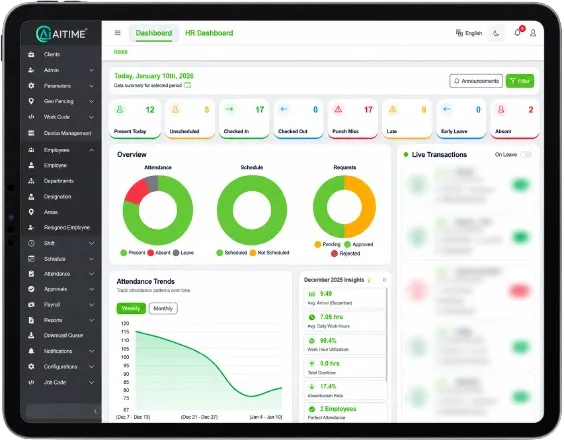
AITIME is attendance software for Kumasi employers that works as well at a sawmill gate in Sokoban or on a hospital ward as it does in an Adum office, with offline capture and payroll-ready hours.
Get a quote for Kumasi
Share your headcount and sites. A specialist replies with a demo slot and pricing.
In short
AITIME is a time and attendance system for employers in Kumasi and across the Ashanti Region. It links fingerprint and face terminals with a GPS mobile app, keeps recording offline during power cuts, applies Labour Act 2003 hours and leave rules, and exports payroll-ready hours for SSNIT and PAYE. It suits timber processors, hospitals, schools, universities, traders and mining contractors.
Last reviewed 3 November 2026 · AITIME implementation team
Overview
Kumasi works differently from Accra. The Ashanti capital runs on trade around Kejetia and Adum, on workshops in Suame Magazine, on sawmills and the wood village at Sokoban, on factories in Kaase and Asokwa, and on large institutions such as KNUST and Komfo Anokye Teaching Hospital. Many of these employers still use signing books, and those that bought fingerprint readers often run them site by site with no link to payroll. That gap is what attendance software in Kumasi needs to close.
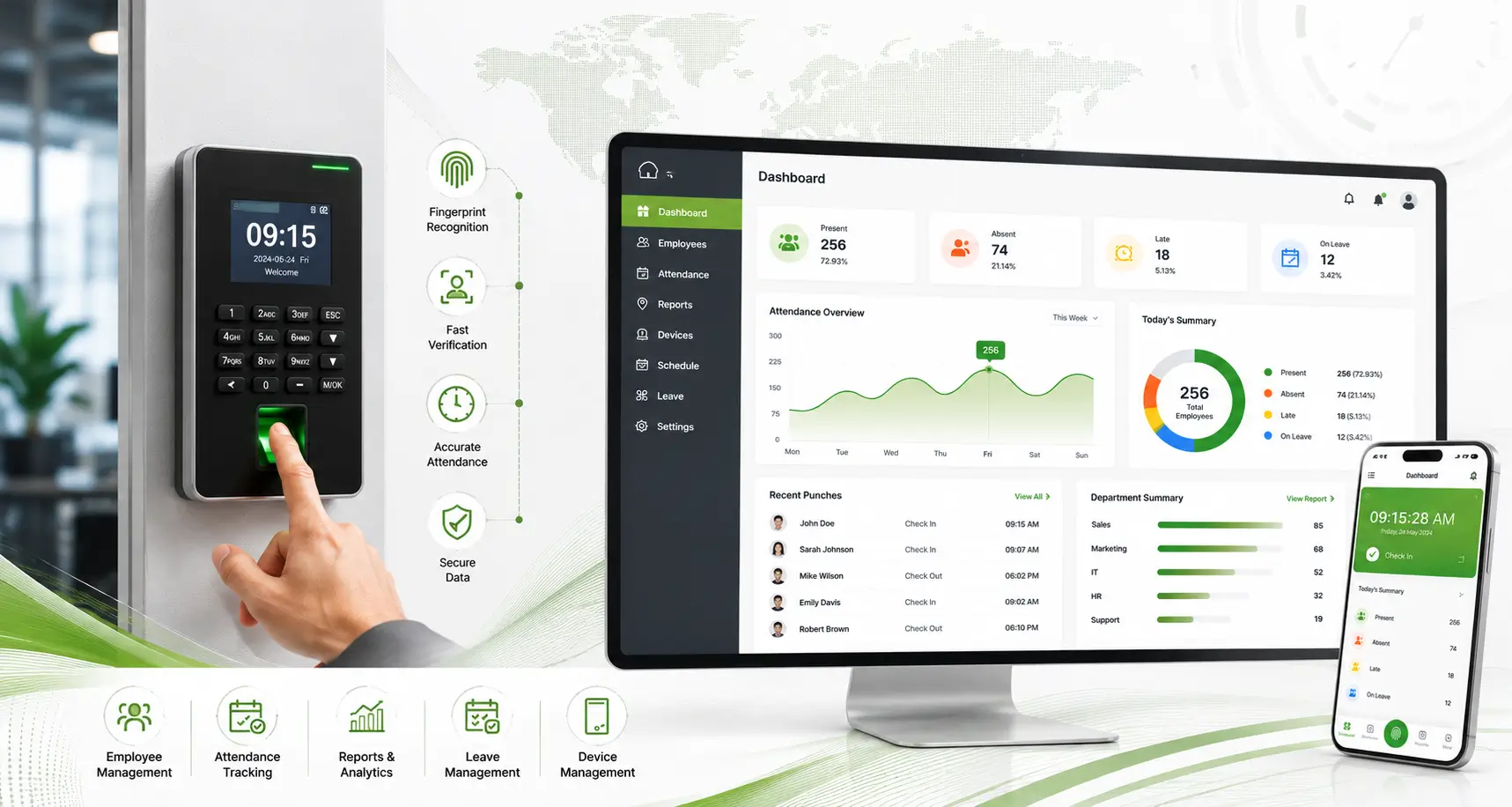
AITIME puts every site on one record. A face terminal at a sawmill gate, fingerprint readers at a hospital staff entrance and the mobile app for purchasing clerks at cocoa buying centres in Bekwai or Offinso all report to the same dashboard, which head office can check from anywhere. When the lights go off, punches stay on the device and sync with their real timestamps once power returns.
Rules follow the Labour Act 2003: 40 normal hours a week, weekly rest and at least 15 working days of annual leave. Hospital night duty, three-shift mills and school calendars each get their own roster pattern, and casual workers paid by the day are counted separately from permanent staff, so SSNIT and PAYE inputs stay accurate.
Setup is handled remotely by our Dubai team. We connect existing ZKTeco or Hikvision devices where possible and run a parallel payroll month. Training and support come by WhatsApp, phone and video, and on-site installation for larger sites, such as a mining contractor near Obuasi, can be discussed during the demo.
Features
Fingerprint and face terminals at sawmill gates and workshop entrances in Sokoban, Kaase and Suame Magazine replace signing books, so each punch is tied to the worker who was actually there that morning.
Morning, afternoon and night duties for nurses, doctors and support staff at teaching hospitals and private clinics, with roster changes pushed straight to the app and overtime visible before the month closes.
Teaching and non-teaching staff at senior high schools, colleges and campuses such as KNUST check in by terminal or app, with vacations and public holidays set separately for each institution.
Battery-backed terminals store punches through outages, and the app captures check-ins without data on the roads to Obuasi, Konongo or Mampong. Records sync with their original timestamps.
Purchasing clerks, extension officers and sales reps covering Ashanti districts check in inside geofences around buying centres, farms or client shops, giving HR proof of attendance without a supervisor on site.
Track day labourers at timber yards and trading warehouses alongside permanent staff, with days worked and overtime exported per worker so daily wages are paid on verified attendance.
Compliance
Kumasi employers follow the same Labour Act 2003 (Act 651), SSNIT and GRA rules as the rest of Ghana. What changes is the mix of shift work, casual labour and public institutions, and AITIME records the attendance data each rule depends on.
The Labour Act covers casual and temporary workers as well as permanent staff, and a temporary worker kept on continuously for long enough must be treated as permanent. Recording each worker’s days shows HR when continuous engagement means status and benefits need review.
Hospitals and 24-hour plants rely on night duty and long shifts, yet normal hours remain 8 a day and 40 a week under the Act. AITIME separates normal time from overtime on every shift and keeps a dated record of who worked each night.
Every worker is entitled to at least 15 working days of paid leave after 12 months of service. Schools and universities often schedule leave around vacations, and AITIME tracks balances per person so planned and statutory leave do not get mixed up.
SSNIT is computed on basic salary and PAYE is remitted monthly to GRA. Days worked, unpaid absence and overtime export separately, so your payroll team or accountant starts from verified figures rather than handwritten registers collected from each site.
Under the Data Protection Act 2012 (Act 843), fingerprints and face images are personal data. Register as a data controller with the Data Protection Commission, explain the purpose to staff before enrolment, and restrict template access to named administrators.
Industries
Sawmills, furniture makers and wood traders around Sokoban and Kaase, with gate terminals and day-rate tracking.
ExploreTeaching hospitals, district hospitals and private clinics running 24-hour duty rosters with night and on-call tracking.
ExploreUniversities, colleges and senior high schools tracking teaching and non-teaching staff across campuses.
ExploreContractors and suppliers serving the gold belt around Obuasi, with camp terminals and long rotations.
Licensed buying companies, warehouses and processors with seasonal staff and mobile check-in during the main crop.
Wholesalers and shops around Kejetia and Adum with early opening times and several outlets to supervise.
ExploreTell us how many people you employ, where they work and which devices you already own. We will map the rules, devices and payroll output before you commit.
Coverage
Remote onboarding and support are available for employers across Kumasi and the wider Ashanti Region, including:
FAQs · Kumasi
Cannot see your question? Message us and a specialist will answer the same day.
Ask on WhatsAppThe price depends on how many employees you have, the number of sites and terminals, and the modules you choose, such as the mobile app or payroll exports. A school or clinic with one entrance costs far less than a multi-site timber group. Send your details through the form and we will prepare a written quote.
Very likely. Most attendance machines sold in Kumasi are ZKTeco or Hikvision models, and AITIME connects to most of them, as well as Dahua and AITime terminals. Share the model names before the demo and we will confirm which can be reused and whether anything needs replacing.
Yes. You can build morning, afternoon and night duty patterns, rotating rosters and on-call schedules per ward or department. Changes are pushed to staff through the app, and overtime from extended duties shows on the dashboard before month end, so HR is not surprised by the payroll figure.
Enrol casual workers on the gate terminal like permanent staff, but place them in their own group with a daily rate. Each day worked is recorded from their punches, and the export lists days and overtime per worker, so you pay on evidence and can see when a temporary arrangement has run long.
Terminals keep punches in their memory and, with a battery backup, keep accepting fingerprints and faces during outages. The mobile app records check-ins offline too. Once power and data return, records sync with the original times, so no shift goes missing from payroll.
AITIME is set up around the Labour Act 2003: the 40-hour week, weekly rest, 15 days minimum annual leave and your agreed overtime rates. For SSNIT and PAYE it exports days worked, unpaid absence and overtime to your payroll system, which computes and files the contributions. It does not file with SSNIT or GRA itself.
We do not have a Kumasi office. Setup, training and support are delivered remotely from Dubai by WhatsApp, phone and video, which works well when devices are already installed or bought locally. If you need on-site installation for a larger site, we can discuss options during the demo.
Free demo & quote
A 20 minute live walkthrough using your own shift patterns and sites, followed by a written quote. No obligation.