Free demo · Book now

Time Attendance System logo

South Africa · All provinces

Time & Attendance Software in South Africa

AITIME is a time and attendance system built for South Africa: one biometric clocking system for every site, BCEA overtime and Sunday rules applied automatically, and offline capture that keeps working through load-shedding. Payroll gets verified hours for PAYE, UIF and SDL every month.

  • Free live demo
  • Arabic & English
  • Works with existing devices

Get a quote for South Africa

Share your headcount and sites. A specialist replies with a demo slot and pricing.

No obligation. We usually reply within one business hour.

In short

Time & Attendance Software for South Africa: the short answer

AITIME is a cloud time and attendance system for South African employers. It collects clockings from ZKTeco, Hikvision and Dahua fingerprint and face terminals and a GPS mobile app, stores punches offline during load-shedding, and applies BCEA 1997 rules for the 45-hour week, 1.5x overtime and Sunday and public holiday pay. Hours export to payroll for PAYE, UIF and SDL.

Last reviewed 3 November 2026 · AITIME implementation team

South Africa at a glance for HR teams

Governing law
Basic Conditions of Employment Act 75 of 1997 (BCEA)
Ordinary hours
45 a week: 9 a day on a 5-day week, 8 a day on a 6-day week
Overtime
1.5x normal wage, max 3 hours a day and 10 hours a week by agreement
Sundays & public holidays
Sunday 2x (1.5x if Sunday is a usual workday); public holidays double pay
Annual leave
21 consecutive days a year (15 working days on a 5-day week)
Statutory payroll
PAYE to SARS, UIF 1% employee + 1% employer, SDL 1% of payroll
Data protection
POPIA (Act 4 of 2013): biometrics are special personal information
Power supply
Load-shedding and local outages: use battery backup and offline storage

Overview

Clocking data payroll can trust, from the shaft head to the shop floor

Walk into most South African workplaces and you will find a fingerprint clocking machine by the door, but the real work happens afterwards. A supervisor exports the device log to Excel, fixes missed clockings by hand, works out who qualifies for Sunday double time and emails the lot to payroll two days before cut-off. Add a second branch, a night shift and a load-shedding morning when the terminal went dark, and the numbers stop matching. A time and attendance system in South Africa has to close those gaps, not just record fingerprints.

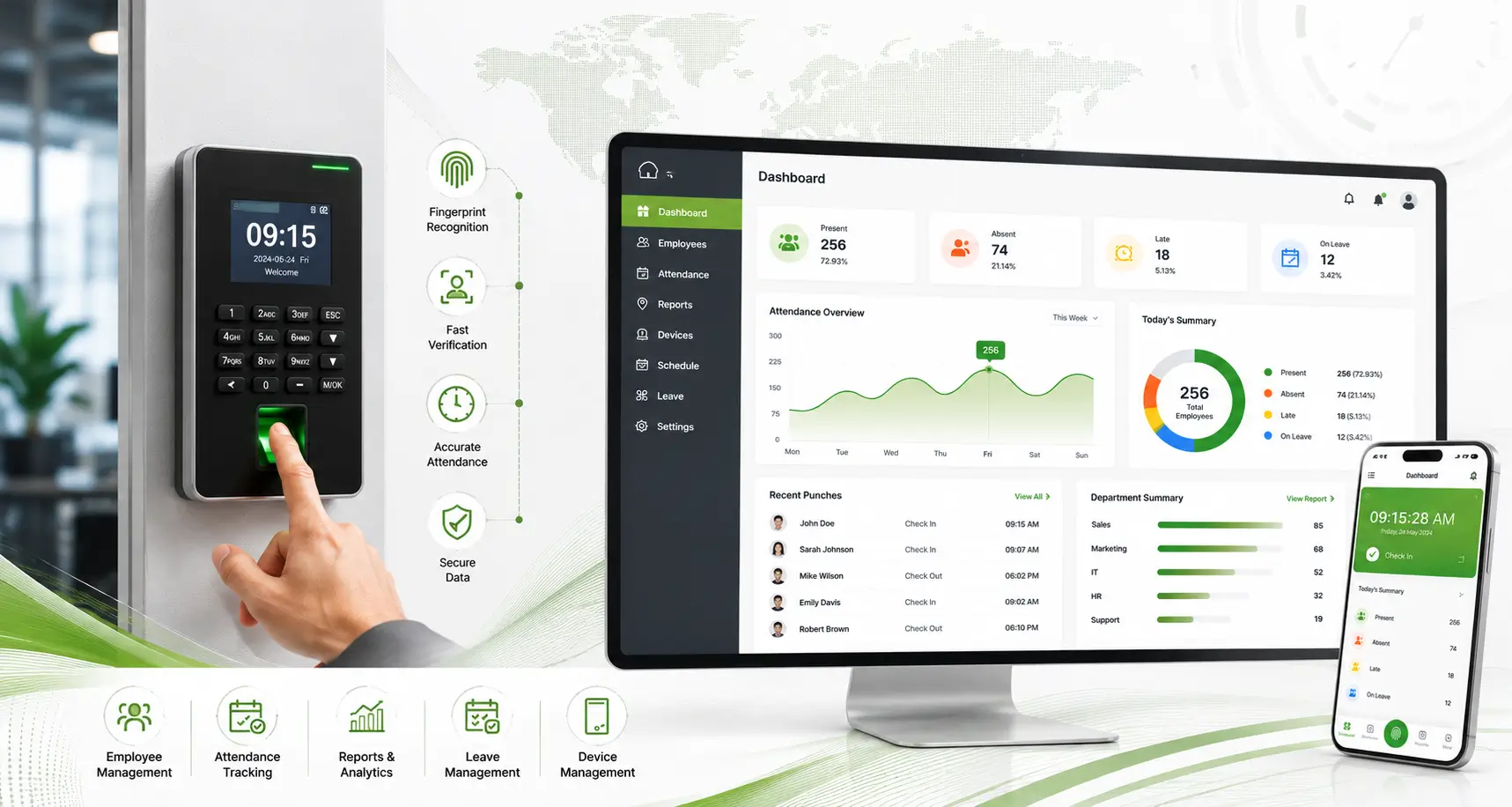
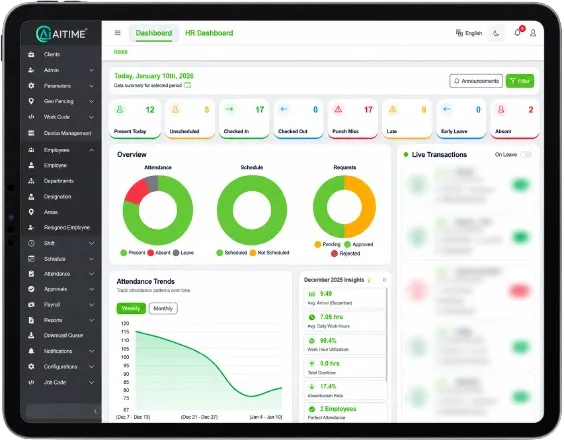
AITIME takes clockings from fingerprint, face and card terminals at every site, plus a GPS mobile app for reps, technicians and guards on client premises, and builds one timeline per employee. Terminals keep storing clockings when the power or fibre drops and sync with the original time once it returns. Shift patterns, grace periods, meal intervals and overtime limits are set once and applied to everyone the same way, from a Durban warehouse to a Rustenburg mine gate.

The rules engine follows the BCEA: 45 ordinary hours a week, overtime at one and a half times the normal wage within the 10-hour weekly limit, Sunday and public holiday premiums, and hours between 6pm and 6am flagged for the night-work allowance. Where a bargaining council main agreement sets different hours or rates, as in metal and engineering, the motor trade or private security, you configure that agreement for the staff it covers. Approved hours then export for PAYE, UIF and SDL processing in your payroll system.

Rollout is remote. We connect your existing ZKTeco or Hikvision devices over the internet, import employees and run one pay period alongside your current process before you switch. Training and support happen over WhatsApp, phone and video, and on-site installation can be discussed during the demo.
Book a free demo

Features

What you get in South Africa

Built for load-shedding and outages

Terminals on a UPS or battery pack keep clocking staff in during load-shedding and store every punch offline until power and fibre return. Records sync with their original time, so there are no missing clockings to chase.

BCEA overtime and Sunday rules

Overtime is calculated at 1.5x within the 3-hour daily and 10-hour weekly limits. Sunday work, public holidays and night shifts between 6pm and 6am are tagged automatically for the correct premium or allowance.

Bargaining council and sectoral setups

Apply a main agreement's hours, shift allowances and overtime rates to one group, such as security officers on long shift cycles or metalworkers on a three-shift plant, while office staff follow standard BCEA terms in the same account.

Fingerprint, face and card clocking

Keep the fingerprint clocking machine you already own, or add face terminals for dusty, gloved or high-hygiene workplaces. ZKTeco, Hikvision and Dahua devices all feed one cloud record across every branch.

Payroll-ready hours each month

Ordinary hours, overtime, Sunday time, unpaid absence and leave export to Excel, CSV or API for your payroll system, so PAYE, UIF and SDL are calculated from verified hours rather than handwritten timesheets.

POPIA-minded data handling

Role-based access limits who can see biometric and attendance records, and the audit trail logs every view and edit. That supports the safeguards POPIA expects when you process special personal information such as fingerprints.

Compliance

BCEA, payroll and POPIA rules that depend on clocking data

Most South African employees fall under the Basic Conditions of Employment Act 75 of 1997, and its working-time sections apply in full to staff earning below the annual earnings threshold. AITIME turns those sections into rules so payroll works from verified hours instead of estimates.

  1. 01

    Ordinary hours and overtime

    Ordinary hours are capped at 45 a week, which means 9 hours a day on a five-day week or 8 on a longer week. Overtime needs agreement, is limited to 3 hours a day and 10 a week, and is paid at 1.5 times the normal wage or as agreed time off.

  2. 02

    Sundays, public holidays and night work

    Sunday work earns double pay, or 1.5 times for staff who ordinarily work Sundays. Work on a public holiday is by agreement and paid at least double. Work between 6pm and 6am needs an allowance or shorter hours, and transport must be available.

  3. 03

    Meal intervals and rest periods

    Employees get a one-hour meal interval after five hours of continuous work, reducible to 30 minutes by written agreement, plus 12 hours' daily rest and 36 hours' weekly rest. AITIME flags short breaks and short turnarounds between night and day shifts.

  4. 04

    Leave cycles

    Annual leave is 21 consecutive days a year, sick leave is six weeks' worth of paid days over a 36-month cycle, and family responsibility leave is three days a year for qualifying staff. Balances accrue from actual service and update as leave is approved.

  5. 05

    PAYE, UIF, SDL and the ETI

    Employers withhold PAYE for SARS, contribute 1% of remuneration to UIF with a matching 1% from the employee, and pay a 1% Skills Development Levy above the payroll threshold. The Employment Tax Incentive is adjusted for young employees paid for fewer than 160 hours in a month, so hours must be exact.

  6. 06

    POPIA and biometric data

    Fingerprints and face templates are biometric information, which POPIA treats as special personal information. Employers need a lawful basis such as consent, a registered Information Officer and reasonable security safeguards. Role-based access and audit trails in AITIME help you show the Information Regulator how clocking data is protected.

Talk to an attendance specialist about South Africa

Tell us how many people you employ, where they work and which devices you already own. We will map the rules, devices and payroll output before you commit.

Coverage

Where we support South African employers

Remote setup and support cover employers across South Africa's metros, industrial hubs and special economic zones, including:

  • Johannesburg & Sandton
  • Pretoria (Tshwane)
  • Ekurhuleni (Germiston, Kempton Park)
  • Cape Town
  • Durban & Dube TradePort
  • Gqeberha & Coega SEZ
  • East London
  • Richards Bay
  • Rustenburg platinum belt
  • eMalahleni & Middelburg
  • Bloemfontein
  • Polokwane
  • Mbombela
  • Kathu & Northern Cape mines

FAQs · South Africa

Questions buyers ask us

Cannot see your question? Message us and a specialist will answer the same day.

Ask on WhatsApp

How much does a time and attendance system cost in South Africa?

Pricing depends on your headcount, the number of sites and clocking devices, and the modules you choose, such as payroll exports or the mobile app. If you already own compatible ZKTeco or Hikvision terminals, most of the hardware cost falls away. Send us your employee numbers and branch list through the form and we will come back with a written quote.

Can we keep using our existing fingerprint clocking machine?

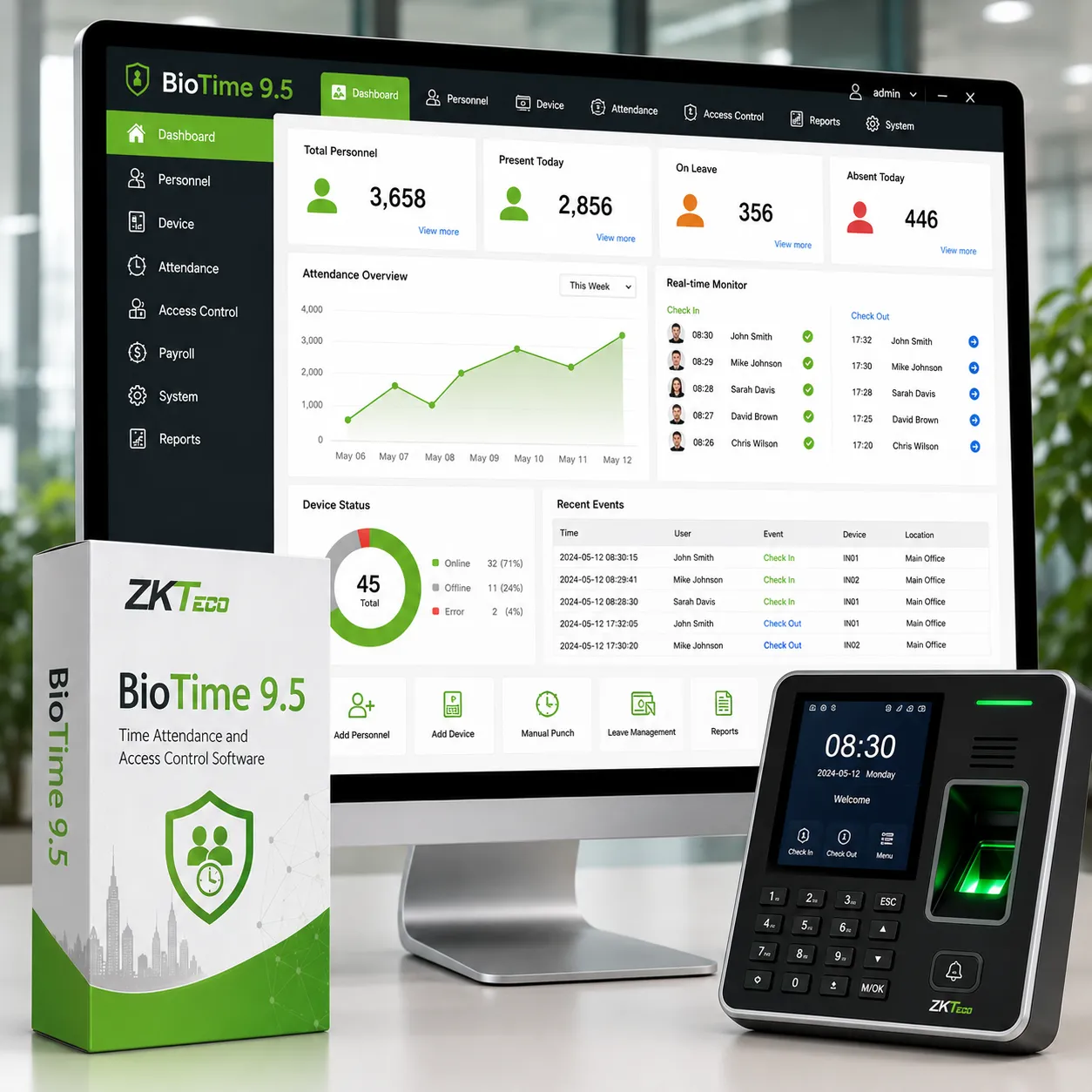
In most cases, yes. AITIME works with most ZKTeco fingerprint and face models, Hikvision face terminals and Dahua devices, and can run alongside BioTime. Before you commit, we check your model numbers during the demo and tell you which units can be reused and which, if any, need replacing.

Does AITIME calculate overtime and Sunday pay under the BCEA?

Yes. Overtime is calculated at one and a half times the normal wage, and supervisors are warned when someone approaches the 3-hour daily or 10-hour weekly limit. Sunday hours are priced at double time, or 1.5 times for staff who ordinarily work Sundays, and public holiday work at double pay. Bargaining council rates replace these where an agreement applies.

What happens to clockings during load-shedding?

Terminals connected to a UPS or battery keep clocking staff in and store every punch locally while the power or fibre is down. The mobile app also records check-ins offline on the phone. Once the connection returns, everything syncs with the original timestamps, so a dark morning does not leave gaps in payroll.

Is biometric clocking allowed under POPIA?

Yes, provided you meet POPIA's conditions. Fingerprints and face templates are special personal information, so you need a lawful basis such as the employee's consent, a registered Information Officer and suitable security safeguards. Many employers also offer a card alternative. AITIME supports this with role-based access, audit trails and RFID card or app clocking for staff who decline biometrics.

Can it handle bargaining council agreements and different pay groups?

Yes. You can set up separate rule sets for groups covered by a bargaining council main agreement, such as metal and engineering or private security, and for staff on standard BCEA terms. Each group gets its own hours, overtime rates, shift allowances and leave rules inside the same account.

Does it work with our payroll for PAYE, UIF and SDL?

AITIME exports approved ordinary hours, overtime, Sunday and public holiday time, unpaid absence and leave as Excel, CSV or through the API, ready for your payroll system to import. Your payroll software then calculates PAYE, UIF and SDL and handles SARS submissions such as the EMP201. AITIME does not file with SARS directly.

How does implementation work if your team is based in Dubai?

Setup, training and support are delivered remotely over WhatsApp, phone and video. We connect your existing devices, import employees and run one pay period in parallel before you switch over. A single site with working terminals can often go live in about a day, and on-site installation for larger rollouts can be discussed during the demo.

Free demo & quote

Get your free demo for South Africa

A 20 minute live walkthrough using your own shift patterns and sites, followed by a written quote. No obligation.

No obligation. We usually reply within one business hour.

CallWhatsAppFree quote