Face terminals for tower offices
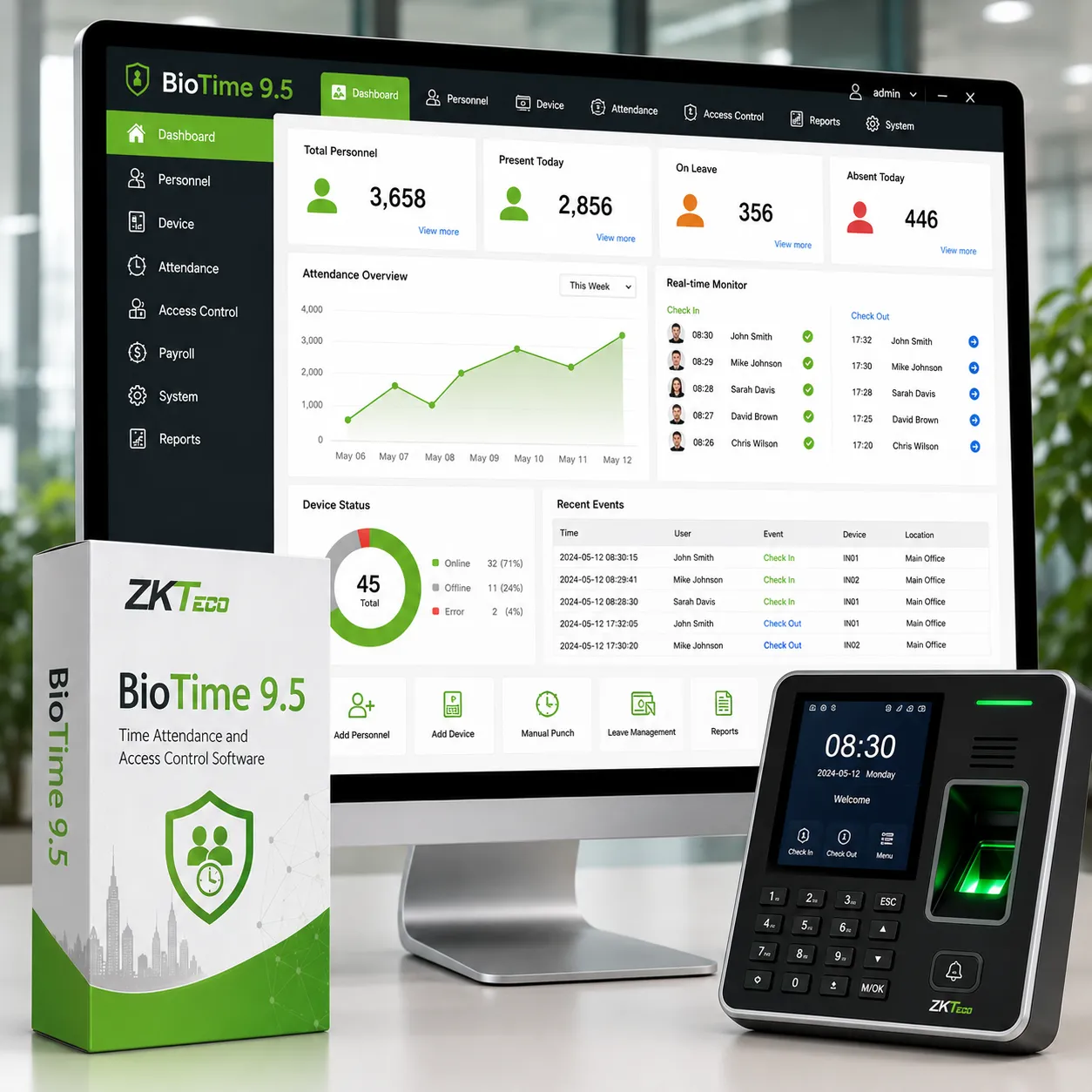
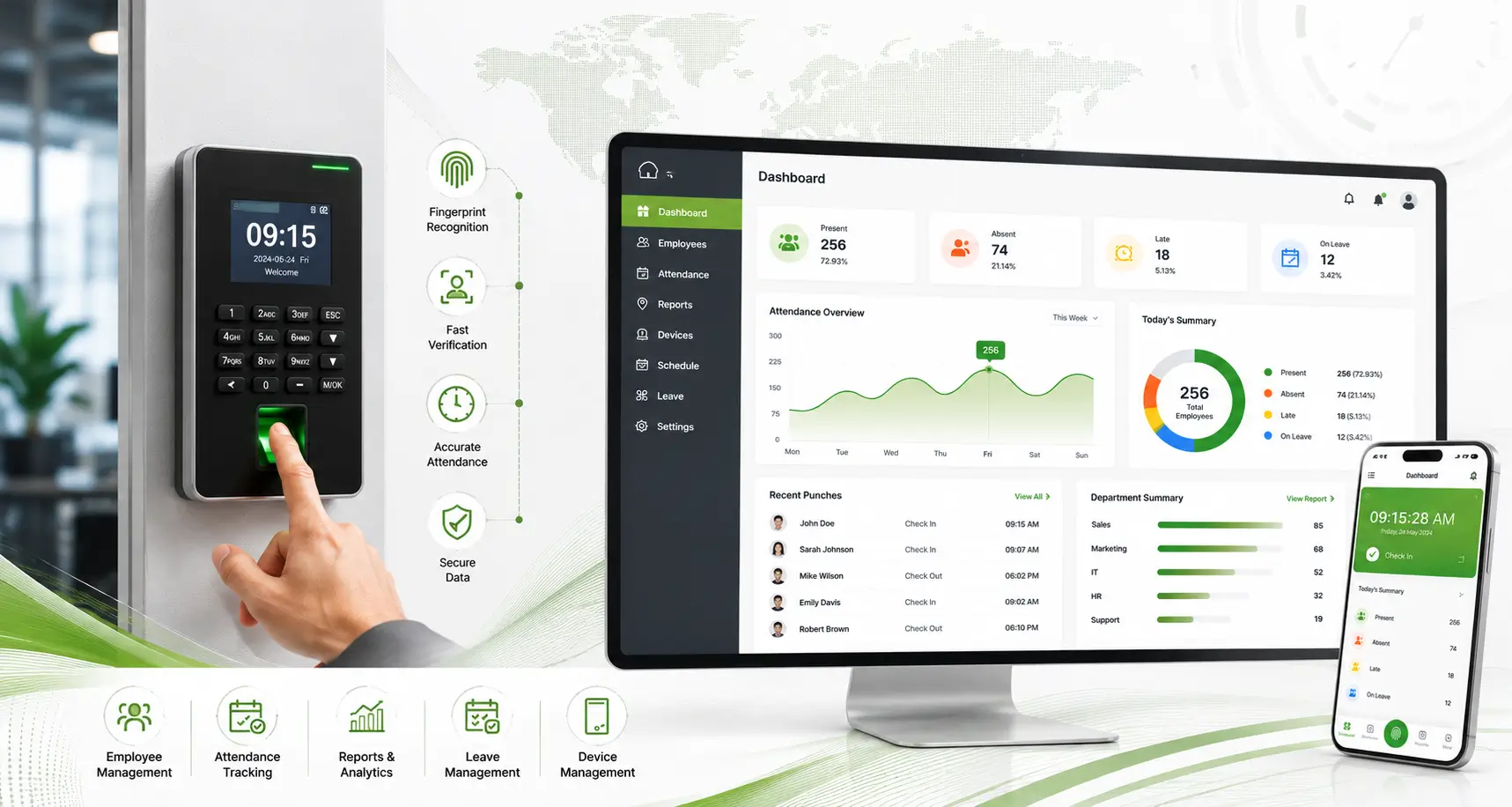
Touchless face recognition at staff entrances in Sharq, Mirqab and Qibla towers keeps lines moving at 8am, can sit beside building turnstiles and gives HR a verified start time for every employee.
Free demoFree demo for teams across the UAE, GCC & Africa · Book now
Kuwait City · State of Kuwait
AITIME is attendance software for Kuwait City employers, from banking floors in Sharq and Mirqab to Shuwaikh workshops and F&B outlets spread across Salmiya and Al Rai, with Kuwait Labour Law rules applied to every punch.
Get a quote for Kuwait City
Share your headcount and sites. A specialist replies with a demo slot and pricing.
In short
AITIME is a time attendance system for Kuwait City businesses. It connects fingerprint and face terminals in Sharq and Mirqab offices, Shuwaikh workshops and retail or F&B outlets with a GPS mobile app, applies Private Sector Labour Law No. 6 of 2010 hours, overtime and Ramadan rules, and exports payroll-ready data. It suits banks, contractors and multi-outlet chains.
Last reviewed 3 November 2026 · AITIME implementation team
Overview
Kuwait City employers juggle very different workplaces. Banks and investment firms fill the towers of Sharq and Mirqab with access-controlled floors, car showrooms and workshops line Shuwaikh Industrial, freight moves through Shuwaikh Port, and retail and F&B chains run outlets from Salmiya to the Avenues area in Al Rai. Staff commute from Farwaniya, Jleeb Al Shuyoukh or Mangaf on crowded ring roads. Attendance software in Kuwait City has to fit all of that without forcing one rulebook on everyone.
AITIME gives each workplace the right capture method: face terminals at tower lobbies and staff entrances, fingerprint devices in workshops, and the GPS mobile app for sales staff, merchandisers and delivery riders. Grace periods and flexible start windows can be set per department, so ring-road traffic is handled by policy rather than daily arguments. Area managers see every outlet on one live dashboard, and staff who cover two branches in a week are tracked as one person.
Behind that, Private Sector Labour Law No. 6 of 2010 runs as one set of rules: 8 hours a day and 48 a week, the 36-hour Ramadan week, overtime at the wage plus 25% within the 2-hour daily limit, and rest-day premiums. Outdoor crews at the port and in Shuwaikh yards are checked against the 11am to 4pm summer ban, and government contractors can export hours per ministry site for monthly invoices.
Many rollouts start at a single office or outlet using existing ZKTeco or Hikvision devices, then add branches once the first payroll month matches. Configuration and staff training happen remotely over WhatsApp, phone and video calls, and on-site installation can be discussed during the demo.
Features
Touchless face recognition at staff entrances in Sharq, Mirqab and Qibla towers keeps lines moving at 8am, can sit beside building turnstiles and gives HR a verified start time for every employee.
Split shifts, late closes and weekend peaks across outlets in Salmiya, Hawally and Al Rai. Area managers move staff between branches and AITIME keeps each hour against the right outlet for labour cost reports.
Merchandisers, sales reps and technicians visiting clients across the governorates check in from the app only inside the geofence for that store or site, so you know they arrived without calling them.
Cleaning, security and maintenance firms serving ministries and public authorities can export hours per employee per site, giving clean backup for monthly invoices and contract audits.
Fingerprint or card terminals suit garages, fabrication shops and warehouses in Shuwaikh Industrial, where staff clock in by shift. Punches are stored locally if the network drops and synced with original timestamps.
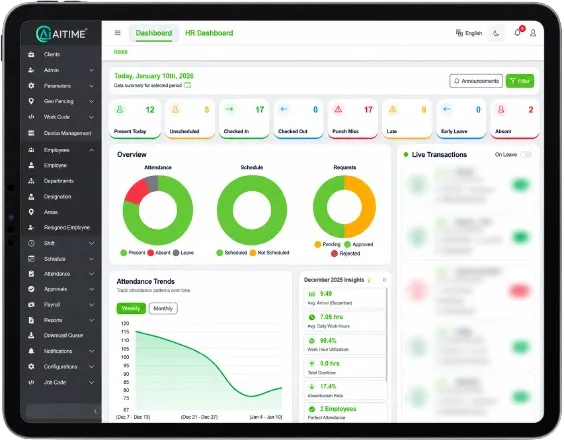
See who is in, late or absent across every office, outlet and workshop in real time. Exceptions, overtime approvals and leave requests sit in one queue, so payroll closes on time each month.
Compliance
Kuwait City employers follow the same Private Sector Labour Law No. 6 of 2010 as the rest of the country, but office, retail, workshop and outdoor teams use it in different ways. AITIME lets each group follow its own rules inside the law.
The legal ceiling is 8 hours a day and 48 a week, with a rest break of at least one hour after 5 consecutive hours. Many Kuwait City offices work shorter weeks, and AITIME measures actual hours against both your contract and the legal limit.
Late closes and weekend peaks generate overtime, paid at the wage plus 25% and limited to 2 hours a day. AITIME totals each person across outlets, so someone covering two branches in one week is paid and capped correctly.
Work on the weekly rest day earns the wage plus 50% and a substitute day off, and public holiday work carries its own premium. National Day and Liberation Day on 25 and 26 February, plus moon-sighted Eid holidays, are loaded into the calendar.
During Ramadan the working week is reduced to 36 hours. Offices, banks and government contractors usually shorten the day, while restaurants shift towards iftar and late-night service. AITIME applies Ramadan rosters per department and recalculates overtime against the shorter week.
Port, yard and construction crews in Shuwaikh must stop outdoor work between 11am and 4pm from June to August. AITIME flags outdoor rosters that cross that window and keeps the punch record as evidence of compliance.
Industries
Banks, investment firms and insurers in Sharq and Mirqab with access-controlled floors and branch networks.
ExploreF&B chains with outlets across Salmiya, Hawally and Al Rai, split shifts and central kitchens.
ExploreMall and high-street stores with evening and weekend rosters, including the large malls in Al Rai and Salmiya.
ExploreCleaning, security and maintenance companies serving ministries, with hours reported per site.
ExploreFreight forwarders and warehouses around Shuwaikh Port and the industrial area.
ExploreProperty managers and facility teams covering towers and residential buildings across the city.
ExploreTell us how many people you employ, where they work and which devices you already own. We will map the rules, devices and payroll output before you commit.
Coverage
We support Kuwait City employers remotely by WhatsApp, phone and video, and on-site installation can be discussed during the demo:
يناسب AITIME المكاتب في أبراج شرق والمرقاب، والورش والمستودعات في منطقة الشويخ الصناعية، وسلاسل المطاعم والمتاجر المنتشرة في السالمية وحولي والري. يجمع البرنامج تسجيلات أجهزة البصمة والوجه وتطبيق الجوال في لوحة تحكم واحدة، ويتيح فترات سماح مرنة تراعي ازدحام الطرق الدائرية، ويحتسب العمل الإضافي وفق قانون العمل الكويتي. اطلب عرضاً تجريبياً مجانياً باللغة العربية أو الإنجليزية.
FAQs · Kuwait City
Cannot see your question? Message us and a specialist will answer the same day.
Ask on WhatsAppPricing is based on employees, sites, devices and modules. A single Sharq office reusing one ZKTeco terminal is a very different project from an F&B group with twenty outlets and a central kitchen. Share your headcount, outlets and current devices and we will send a written quote that matches your setup.
In most cases, yes. AITIME works with common ZKTeco fingerprint and face models, BioTime installations and Hikvision or Dahua terminals. Before the demo, send model names or a photo of each device label and we will tell you what connects directly and where a replacement makes sense.
You set the policy and AITIME applies it consistently. Choose grace minutes, a flexible arrival window with fixed daily hours, or core hours per department. Anyone outside the policy shows on the dashboard, and repeat lateness can feed deductions where your contracts allow it.
Yes. An employee can punch at any outlet terminal or check in by geofenced app, and AITIME allocates each hour to the outlet where it was worked. Area managers see labour hours per branch, and overtime is totalled per person across all outlets, not per location.
Yes. Overtime is calculated at the wage plus 25%, within the limit of 2 hours a day, under Private Sector Labour Law No. 6 of 2010. Rest-day work is tagged for the 50% premium and a substitute day off, and Ramadan rosters use the 36-hour week.
Nothing is lost. Terminals store punches locally and the mobile app captures check-ins offline. Once the connection is back, records sync with their original timestamps, so a router fault at a Salmiya outlet or a Shuwaikh workshop does not create gaps in payroll.
One office or outlet with compatible devices can often go live in about a day. Larger groups start with a pilot site and a parallel payroll month before adding branches. Training and configuration are handled remotely, and on-site installation can be discussed during the demo.
Free demo & quote
A 20 minute live walkthrough using your own shift patterns and sites, followed by a written quote. No obligation.